

Your personal information is more valuable than ever. Every online account, banking app, shopping website, and social media profile stores details that cybercriminals want to steal. One careless click can expose your sensitive data, leading to financial fraud, damaged credit, and months of recovery. That’s why Identity Theft Protection has become an essential part of modern cybersecurity instead of an optional extra.
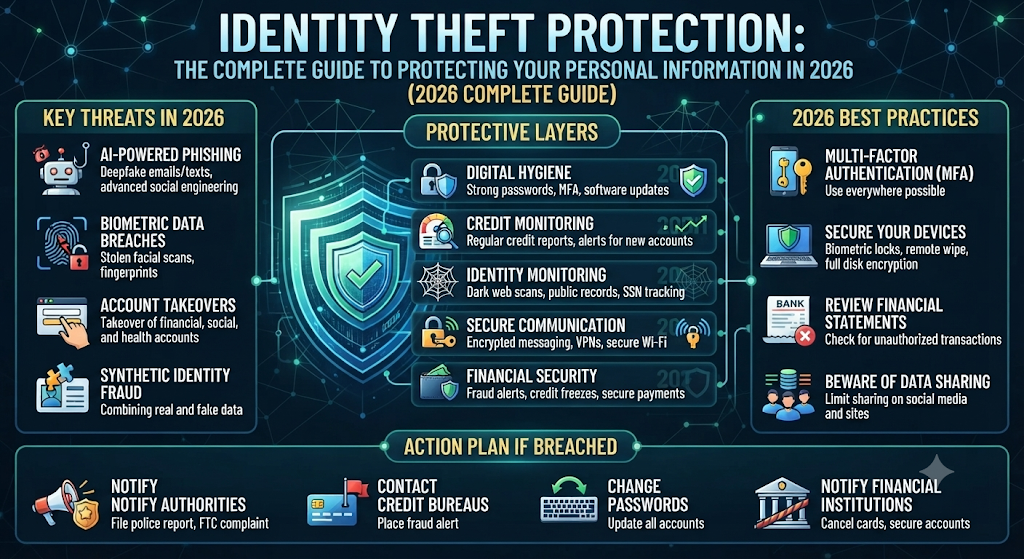
Whether you shop online, use mobile banking, or simply browse the internet, understanding Identity Theft Protection helps you make smarter choices every day. This guide explains how identity theft happens, why it continues to grow in the United States, and the practical steps you can take to protect your identity online without needing advanced technical knowledge.
What Is Identity Theft Protection?
Identity Theft Protection is the process of protecting your personal information from people who try to steal or misuse it. It combines good online habits, online security practices, monitoring services, and security tools that reduce the risk of personal information theft. The goal is simple. Keep your identity safe before criminals have a chance to misuse it.
Think of it as a home security system for your digital life. Strong passwords, two-factor authentication, identity monitoring, and credit monitoring all work together to prevent identity theft. No single tool offers complete protection, yet combining several security practices creates a much stronger defense against modern online threats.
Understanding Identity Theft Protection and Why It Matters
Every day, millions of Americans share information online while shopping, banking, paying bills, or signing into apps. Each activity creates another opportunity for cybercriminals to target valuable sensitive data. Good identity verification practices help reduce these risks before they become serious problems.
Identity theft often begins quietly. A stolen password or leaked email address may seem harmless at first. Weeks later, criminals may attempt an account takeover, open financial accounts, or make unauthorized purchases. Early protection saves time, money, and unnecessary stress.
Identity Theft vs. Identity Fraud: What’s the Difference?
Many people use these terms interchangeably, but they describe different stages of the same crime. Identity theft occurs when someone steals your personal information. Identity fraud happens when that stolen information is actually used to commit financial fraud or other illegal activities.
Understanding this difference helps you react quickly. Discovering stolen information early gives you time to change passwords, activate fraud alerts, and secure important accounts before criminals can cause significant damage.
Why Every American Needs Identity Theft Protection in 2026
Life in the United States depends heavily on digital services. Online banking, healthcare portals, tax filing, remote work, and online shopping all require sensitive information. That convenience also creates more opportunities for social engineering, phishing emails, and sophisticated online scams.
Even careful internet users face risks because large companies occasionally experience a data breach. When that happens, your information may be exposed through no fault of your own. Strong security habits help reduce the damage if your information becomes available to criminals.
Why Identity Theft Is Increasing in 2026
Identity theft continues to grow because people spend more time online than ever before. Smartphones, cloud storage, digital payments, and connected devices have made life easier. Unfortunately, they have also expanded the number of opportunities available to cybercriminals searching for vulnerable accounts.
Modern attacks are no longer limited to obvious scams. Criminals now combine artificial intelligence, leaked databases, fake customer support messages, and online scam prevention weaknesses to trick even experienced users. Staying informed is one of the strongest ways to prevent identity theft before it happens.
The Rise of AI-Powered Cybercrime
Artificial intelligence allows criminals to create convincing emails, fake voices, and realistic websites within minutes. These attacks often appear trustworthy because they imitate well-known companies with surprising accuracy, making email security and careful verification more important than ever.
Instead of relying on obvious spelling mistakes, modern scams focus on urgency. They pressure people into sharing passwords, verification codes, or banking details before they have time to think carefully.
More Online Accounts Mean More Security Risks
Most Americans now manage dozens of online accounts. Every account contains usernames, passwords, payment information, or personal details. Reusing passwords across several websites increases the chance that one compromised account could unlock many others.
Using unique passwords together with a trusted password manager significantly improves password security while reducing the temptation to reuse the same credentials everywhere.
Why Data Breaches Continue to Grow
Businesses collect enormous amounts of customer information. Unfortunately, attackers continue targeting these databases because they contain valuable records. Even large organizations with strong defenses occasionally experience a data breach, exposing millions of users at once.
Although you cannot stop a company from being hacked, you can reduce your personal risk by changing passwords regularly, enabling multi-factor authentication, and reviewing your accounts for unusual activity.
The Impact of Digital Payments and Remote Work
Digital wallets, online banking, and remote employment have transformed everyday life. While convenient, these services increase the importance of online banking security, secure devices, and safe internet habits because financial information travels through digital systems every day.
Working from public places without proper protection also increases exposure. Secure networks, updated software, and careful browsing habits remain essential parts of cyber attack prevention.
How Cybercriminals Steal Personal Information
Most identity theft begins with simple mistakes rather than advanced hacking. Criminals exploit trust, curiosity, and distraction. A fake message, unsafe download, or unsecured website often provides everything needed to begin stealing personal information.
Successful attackers rarely rely on one method alone. They combine phishing emails, fake websites, malware, and stolen databases to collect usernames, passwords, and financial details before victims realize anything is wrong.
What Information Do Hackers Target?
Hackers focus on information that can generate money or unlock valuable accounts. Full names, home addresses, email addresses, banking details, driver’s license numbers, Social Security numbers, and login credentials remain among the most valuable targets.
Once criminals collect enough information, they may attempt identity verification methods used by banks or online services, allowing them to impersonate legitimate users and gain unauthorized access.
How Phishing Attacks Work
Phishing remains one of the most successful online scams because it targets human behavior instead of computer systems. Attackers send convincing messages that appear to come from trusted organizations, encouraging victims to click dangerous links or reveal confidential information.
Always verify unexpected emails before responding. Good email security, careful thinking, and secure browsing habits remain some of the simplest ways to reduce phishing risks.
How Data Breaches Expose Personal Information
When organizations suffer a data breach, customer records may become available on criminal marketplaces. Those records often include passwords, phone numbers, addresses, and payment details that criminals combine with other leaked information.
Monitoring your accounts after major security incidents helps identify suspicious activity early. Regular identity monitoring provides an additional layer of protection when personal information has already been exposed.
Social Engineering and Online Scams
Social engineering relies on psychology instead of technology. Criminals create trust, urgency, or fear to convince people to reveal information voluntarily. Fake customer support calls and delivery notifications remain common examples.
Learning how these scams operate makes them easier to recognize. Taking a few extra seconds before sharing information often prevents costly mistakes.
Malware, Spyware, and Keyloggers
Malicious software secretly records information or monitors device activity. Some programs capture passwords while others track everything typed on a keyboard. Reliable malware protection, updated software, and cautious downloading greatly reduce these risks.
Avoid downloading unknown software or opening suspicious attachments. One unsafe file can compromise an entire device.
Public Wi-Fi Security Risks
Free Wi-Fi networks in airports, hotels, and coffee shops provide convenience but also introduce security risks. Criminals sometimes monitor unsecured connections to collect valuable information.
Avoid logging into financial accounts on public networks whenever possible. Practicing secure browsing and protecting your mobile security significantly reduces unnecessary exposure.
The Most Common Types of Identity Theft
Identity theft takes many forms because criminals pursue different financial opportunities. Some focus on banking while others target healthcare, taxes, or government benefits. Understanding these categories makes unusual activity easier to recognize.
Knowing how each type works also helps you respond faster. Early detection remains one of the most effective ways to reduce financial damage and protect your long-term privacy.
| Type | Primary Target | Possible Impact |
| Financial Identity Theft | Bank accounts | Unauthorized purchases |
| Credit Identity Theft | Credit cards and loans | Damaged credit score |
| Tax Identity Theft | Tax refunds | Delayed tax processing |
| Medical Identity Theft | Healthcare records | Incorrect medical history |
| Child Identity Theft | Child identity records | Fraudulent financial accounts |
| Criminal Identity Theft | Personal identity | False legal records |
| Synthetic Identity Theft | Mixed real and fake identities | Long-term financial fraud |
Financial Identity Theft
Criminals access checking accounts, savings accounts, or payment cards to transfer money or make purchases. Regular account reviews, bank account security, and transaction alerts improve detection before losses become severe.
Credit Card Identity Theft
Stolen card numbers allow criminals to make unauthorized purchases. Reviewing statements regularly and enabling fraud alerts helps identify suspicious transactions quickly.
Tax Identity Theft
Criminals file fraudulent tax returns using stolen identities to claim refunds. Filing taxes early and protecting sensitive documents reduces this risk considerably.
Medical Identity Theft
Healthcare fraud occurs when someone uses another person’s insurance or medical records. Incorrect information added to medical histories may create long-term complications beyond financial losses.
Child Identity Theft
Children often have clean credit histories, making them attractive targets. Parents should monitor unusual mail, unexpected financial offers, and unauthorized accounts created in a child’s name.
Criminal Identity Theft
Some offenders provide another person’s identity during arrests or investigations. This may create legal complications that require significant time to correct.
Synthetic Identity Theft
Synthetic identity theft combines real information with fabricated details to create entirely new identities. Because these records develop slowly, they often remain undetected for extended periods.
Warning Signs Your Identity May Have Been Stolen
Identity theft rarely happens overnight. Most victims notice small warning signs before discovering a bigger problem. Paying attention to unusual activity gives you a better chance to stop Financial Fraud before it grows. Regular Identity Monitoring, Credit Monitoring, Security Alerts, Bank Account Security, and Digital Privacy checks can make a significant difference.
Many criminals work quietly for weeks or even months. They test stolen information with small transactions before attempting larger crimes. Learning these warning signs helps you Prevent Identity Theft, Protect Your Identity Online, improve Online Fraud Protection, strengthen Internet Safety Tips, and keep your Sensitive Data secure.
Unrecognized Bank Transactions
Finding charges you never made is one of the clearest warning signs. Even a small purchase deserves attention because criminals often test stolen cards with inexpensive transactions before spending larger amounts. Reviewing your statements regularly improves Bank Account Security, supports Credit Monitoring, strengthens Identity Monitoring, protects Personal Information, and reduces Financial Fraud risks.
Unexpected Credit Score Changes
A sudden drop in your credit score may indicate someone has opened new accounts or applied for loans using your identity. Checking your Credit Report several times each year helps identify suspicious activity early. It also supports Identity Verification, improves Online Fraud Protection, protects Sensitive Data, and helps Prevent Identity Theft.
Unknown Accounts Opened in Your Name
Receiving approval letters, credit cards, or bills for accounts you never created should never be ignored. Criminals often use stolen identities to borrow money or finance expensive purchases. Quick reporting protects your Digital Privacy, improves Identity Monitoring, reduces Financial Fraud, strengthens Cybersecurity, and helps Secure Personal Data.
Passwords Suddenly Stop Working
If you cannot log into accounts using the correct password, someone may have changed your credentials without permission. This often signals an Account Takeover attempt. Strong Password Security, a trusted Password Manager, Two-Factor Authentication, and Multi-Factor Authentication greatly reduce this risk.
Suspicious Security Alerts
Many companies send notifications when someone signs in from an unfamiliar location or device. Never ignore these warnings. Fast action protects Online Security, improves Identity Verification, strengthens Cyber Attack Prevention, enhances Email Security, and keeps your accounts under your control.
Bills or Collection Notices You Don’t Recognize
Unexpected medical bills, loan statements, or debt collection letters may indicate someone used your identity. Contact the company immediately and request additional information. Early action protects your Credit Report, improves Fraud Alerts, supports Identity Monitoring, reduces Personal Information Theft, and limits financial damage.
How Identity Theft Can Affect Your Finances and Privacy
Identity theft affects much more than your bank balance. Victims often spend months repairing damaged credit, closing fraudulent accounts, and proving they were not responsible for criminal activity. Strong Cybersecurity, Online Security, Digital Privacy, Identity Monitoring, and Online Banking Security help reduce these long-term risks.
The emotional impact can be just as serious. Many victims lose confidence in online banking, shopping, and digital communication after experiencing identity theft. Learning safer online habits helps you rebuild trust while continuing to Protect Your Identity Online, Secure Personal Data, and Prevent Identity Theft.
Financial Losses and Unauthorized Purchases
Unauthorized purchases can empty checking accounts, increase credit card balances, and create unexpected debt. Reporting suspicious transactions immediately gives financial institutions a better chance to recover stolen funds. Good Bank Account Security, Fraud Alerts, Credit Monitoring, Financial Fraud awareness, and Identity Verification reduce these risks.
Damage to Your Credit History
Fraudulent loans or unpaid balances may remain on your credit history for years if they are not reported quickly. Monitoring your Credit Report regularly allows you to dispute inaccurate information before it affects future financial opportunities. It also supports Identity Monitoring, Secure Personal Data, and Online Fraud Protection.
Emotional Stress and Time-Consuming Recovery
Recovering from identity theft often requires many phone calls, paperwork, and account verification. The process can become frustrating and stressful. Staying organized and keeping records of every conversation improves Identity Verification Methods, strengthens Digital Privacy, supports Cybersecurity, and speeds recovery.
Risks to Your Personal Privacy
Once personal information appears online, criminals may continue using it for years. Information sold on illegal marketplaces often changes hands several times. Protecting Sensitive Data, improving Online Security, using Secure Browsing, practicing Email Security, and following Internet Safety Tips help reduce future exposure.
Long-Term Consequences of Identity Theft
Identity theft can delay home loans, employment background checks, insurance approvals, and financial planning. Regular Credit Monitoring, Identity Monitoring, Online Banking Security, Cyber Attack Prevention, and careful account reviews help protect your long-term financial future.
Best Identity Theft Protection Tips for Everyday Internet Users
Protecting your identity does not require expensive software or advanced technical knowledge. Small daily habits often provide stronger protection than relying on a single security tool. Consistency is the key to effective Identity Theft Protection, Cybersecurity, Online Security, Data Privacy, and Online Fraud Protection.
Building safe digital habits today prevents larger problems tomorrow. Every secure password, software update, and careful online decision creates another layer of defense against Cybercriminals who search for easy targets instead of well-protected accounts.
Create Strong and Unique Passwords
A unique password for every account reduces the damage if one website experiences a Data Breach. Avoid birthdays, names, or simple number patterns. Better Password Security, a trusted Password Manager, Identity Verification, Online Security, and Cyber Attack Prevention all begin with stronger passwords.
Why Strong Passwords Matter
Weak passwords remain one of the biggest causes of Account Takeover attacks. Criminals use automated software to guess common passwords within seconds. Longer passwords combined with Multi-Factor Authentication, Sensitive Data protection, Digital Privacy, and Identity Monitoring significantly improve account safety.
Enable Multi-Factor Authentication
Passwords alone are no longer enough. Two-Factor Authentication adds another verification step before someone can access your account. Even if criminals steal your password, they still need your verification code. This greatly improves Online Security, Identity Verification Methods, Cybersecurity, and Secure Personal Data.
Keep Software and Devices Updated
Software updates fix newly discovered security weaknesses before criminals exploit them. Ignoring updates leaves devices vulnerable to attacks. Regular updates improve Malware Protection, reduce Ransomware risks, strengthen Mobile Security, improve Cyber Attack Prevention, and support Online Banking Security.
Think Before Clicking Unknown Links
Many scams begin with a simple email or text message. Before clicking any link, verify the sender and examine the website address carefully. Strong Email Security, awareness of Phishing Emails, Fake Websites, Online Scam Prevention, and Internet Safety Tips reduce unnecessary risks.
Secure Your Home Wi-Fi Network
A strong Wi-Fi password protects every connected device in your home. Change default router passwords and enable the latest security settings whenever possible. Secure networks improve Online Security, support Secure Browsing, strengthen Mobile Security, protect Sensitive Data, and reduce unauthorized access.
How to Protect Your Personal Information Online
Sharing information online has become part of everyday life. Social media, shopping websites, banking apps, and healthcare portals all require personal details. The goal is not to stop using these services but to use them wisely with better Cybersecurity, Online Security, Digital Privacy, Identity Monitoring, and Secure Personal Data practices.
Good online habits create long-term protection. Every careful decision reduces the chances of Personal Information Theft, improves Online Fraud Protection, strengthens Online Banking Security, supports Cyber Attack Prevention, and helps Protect Your Identity Online.
Limit What You Share on Social Media
Avoid posting birthdays, addresses, travel plans, or answers to common security questions. Criminals collect this information to improve Social Engineering attacks. Better Digital Privacy, Identity Verification, Sensitive Data protection, Email Security, and Internet Safety Tips make your profiles safer.
Shop Only on Trusted Websites
Always confirm that shopping websites use HTTPS encryption before entering payment details. Read reviews and verify the business before purchasing. Safe websites improve Safe Online Shopping, strengthen Online Security, protect Bank Account Security, reduce Financial Fraud, and support Secure Browsing.
Protect Sensitive Documents
Store tax records, identification documents, and financial paperwork in secure locations. Destroy outdated documents before throwing them away. Protecting Personal Information, improving Data Privacy, supporting Identity Monitoring, reducing Personal Information Theft, and strengthening Cybersecurity all begin with careful document management.
Secure Your Email Accounts
Email often becomes the gateway to every other online account because password resets usually arrive there first. Strong passwords, Two-Factor Authentication, Email Security, Password Security, and Identity Verification provide essential protection.
Manage Privacy Settings Effectively
Review privacy settings regularly across social media platforms, mobile apps, and online services. Limiting unnecessary data sharing improves Digital Privacy, supports Cyber Attack Prevention, strengthens Secure Personal Data, enhances Mobile Security, and helps Prevent Identity Theft.
Essential Cybersecurity Habits That Prevent Identity Theft
Protecting your identity is not about one perfect tool. It is about building smart habits that become part of your daily routine. Every secure decision makes it harder for Cybercriminals to steal your Personal Information. Strong Cybersecurity, Online Security, Digital Privacy, and Cyber Attack Prevention work best when practiced consistently.
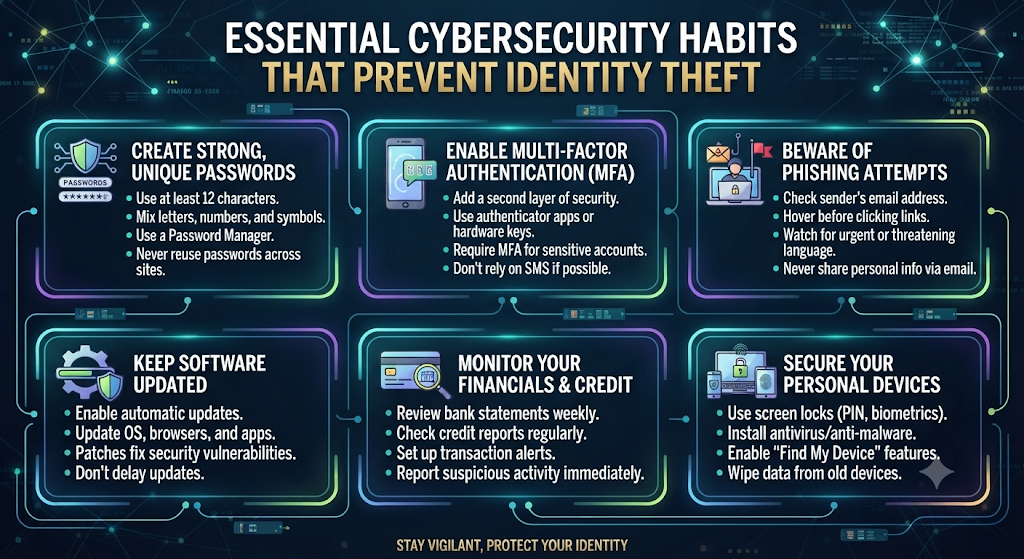
Most identity theft attacks succeed because people overlook simple security steps. Spending a few extra minutes protecting your accounts today can save weeks or even months of recovery later. These habits help Protect Your Identity Online, Prevent Identity Theft, improve Secure Personal Data, support Identity Monitoring, and strengthen Online Fraud Protection.
Why You Should Enable Two-Factor Authentication
A password alone is no longer enough to secure your online accounts. Two-Factor Authentication requires a second verification step before anyone can log in. Even if criminals steal your password, they still cannot access your account without the verification code. This improves Identity Verification, Password Security, Online Security, and Bank Account Security.
How Password Managers Improve Online Security
Remembering dozens of strong passwords is almost impossible. A trusted Password Manager creates unique passwords and stores them safely. This reduces password reuse, lowers the risk of Account Takeover, improves Password Security, protects Sensitive Data, and supports better Cybersecurity practices.
Monitor Device Security Regularly
Computers and smartphones store valuable personal information. Installing updates quickly keeps devices protected against newly discovered security flaws. Regular maintenance improves Malware Protection, reduces Ransomware attacks, strengthens Mobile Security, supports Cyber Attack Prevention, and keeps your digital life safer.
Use Secure Browsers and Privacy Tools
Modern browsers include features that block harmful websites and warn users about dangerous downloads. Privacy-focused browsers and security extensions improve Secure Browsing, strengthen Digital Privacy, reduce Fake Websites, improve Online Security, and help Protect Your Identity Online.
Learn to Spot Fake Messages
Many scams begin with urgent emails or text messages asking you to verify your account. Always pause before clicking any link. Recognizing Phishing Emails, avoiding Social Engineering, improving Email Security, following Internet Safety Tips, and using Identity Verification Methods reduce your risk.
What to Do Immediately If Your Identity Is Stolen
Fast action is the most important step after discovering identity theft. Every hour matters because criminals may continue opening accounts or moving money. Acting quickly limits financial damage and improves your chances of recovering your identity. Strong Identity Monitoring, Credit Monitoring, Fraud Alerts, Cybersecurity, and Online Banking Security become essential.
Stay calm and work through each step carefully. Keeping records of every phone call, email, and report makes recovery easier. Good documentation also supports Identity Verification, protects Personal Information, improves Digital Privacy, and helps Prevent Identity Theft from happening again.
Freeze Your Credit Immediately
A credit freeze prevents criminals from opening new credit accounts in your name. Contact the major credit bureaus as soon as possible. Freezing your credit strengthens Credit Monitoring, improves Fraud Alerts, protects your Credit Report, supports Identity Monitoring, and reduces Financial Fraud.
Contact Your Bank and Card Providers
Notify your financial institutions immediately if you notice suspicious activity. Most banks can block compromised cards, issue replacements, and investigate fraudulent transactions. This improves Bank Account Security, protects Sensitive Data, strengthens Online Banking Security, supports Identity Verification, and reduces financial losses.
Change All Important Passwords
Update passwords for email, banking, shopping, and social media accounts immediately. Create unique passwords for every account and store them using a trusted Password Manager. Better Password Security, Two-Factor Authentication, Cybersecurity, Online Security, and Secure Personal Data provide stronger protection.
How to Report Identity Theft
Reporting identity theft creates an official record that helps resolve disputes with banks and government agencies. File reports promptly and keep copies for future reference. This supports Identity Verification Methods, improves Fraud Alerts, strengthens Digital Privacy, reduces Financial Fraud, and protects your identity.
Monitor Your Financial Accounts
Continue reviewing bank statements and credit reports after the initial incident. Criminals sometimes return months later using previously stolen information. Regular Identity Monitoring, Credit Monitoring, Security Alerts, Bank Account Security, and Online Fraud Protection help detect new activity quickly.
Recover Your Digital Identity
Recovering your digital identity takes patience. Update security settings, review recovery options, and remove unauthorized devices from your accounts. Strong Cyber Attack Prevention, Secure Personal Data, Digital Privacy, Online Security, and Identity Verification reduce future risks.
Best Free and Paid Identity Theft Protection Tools
Security tools cannot guarantee complete protection, but they add valuable layers of defense. Combining several trusted solutions creates stronger protection than relying on only one application. Good Cybersecurity, Identity Monitoring, Credit Monitoring, Password Security, and Online Security work together to reduce risks.
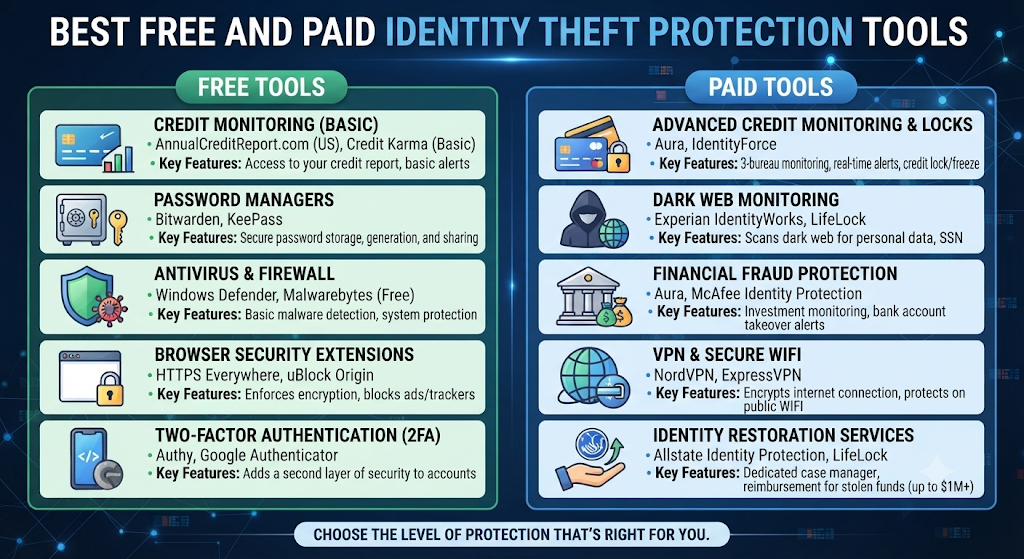
The best protection combines technology with smart online habits. Even free tools can significantly improve your safety when used correctly. Choosing reliable software helps Protect Your Identity Online, Prevent Identity Theft, improve Cyber Attack Prevention, strengthen Digital Privacy, and support Secure Personal Data.
| Tool Type | Main Benefit | Best For |
| Password Manager | Creates and stores strong passwords | Every internet user |
| Antivirus Software | Detects malware | Home computers |
| VPN | Encrypts internet traffic | Public Wi-Fi |
| Credit Monitoring | Detects credit changes | Financial protection |
| Identity Monitoring | Monitors personal data | Identity theft prevention |
| Authenticator App | Secure login codes | Online accounts |
Free Identity Protection Resources
Many financial institutions provide free account alerts and transaction notifications. These services improve Fraud Alerts, support Identity Monitoring, strengthen Bank Account Security, protect Personal Information, and improve Online Banking Security without additional cost.
Premium Identity Theft Protection Services
Paid services usually combine monitoring, restoration assistance, insurance coverage, and identity recovery support. They improve Credit Monitoring, strengthen Identity Verification, protect Sensitive Data, support Financial Fraud detection, and enhance Cybersecurity.
Credit Monitoring Tools
Credit monitoring services notify you when significant changes appear on your credit file. Early warnings improve Credit Report accuracy, strengthen Identity Monitoring, reduce Financial Fraud, support Fraud Alerts, and help Prevent Identity Theft.
Password Managers
A reliable Password Manager automatically generates complex passwords that are difficult to guess. This improves Password Security, reduces Account Takeover, strengthens Online Security, protects Sensitive Data, and supports Cyber Attack Prevention.
Antivirus and Security Software
Modern antivirus software protects against viruses, spyware, and malicious downloads. Good Malware Protection, defense against Ransomware, stronger Cybersecurity, improved Mobile Security, and better Secure Browsing reduce overall security risks.
VPN Services for Extra Privacy
Virtual Private Networks encrypt your internet connection, especially when using public Wi-Fi. They improve Digital Privacy, strengthen Secure Browsing, support Online Banking Security, protect Sensitive Data, and reduce data interception risks.
Common Identity Theft Mistakes You Should Avoid
Many identity theft cases begin with simple mistakes instead of advanced hacking. Avoiding these common habits significantly reduces your chances of becoming a victim. Strong Cybersecurity, Online Security, Identity Monitoring, Digital Privacy, and Secure Personal Data begin with everyday decisions.
Small improvements produce long-term benefits. Building safer online habits protects your finances, personal information, and digital reputation. These practical changes also help Protect Your Identity Online, improve Online Fraud Protection, strengthen Cyber Attack Prevention, and Prevent Identity Theft.
Reusing the Same Password
Using one password across multiple websites creates unnecessary risk. If one account is compromised during a Data Breach, criminals may access several others. Better Password Security, a trusted Password Manager, Two-Factor Authentication, Identity Verification, and Online Security solve this problem.
Ignoring Security Updates
Outdated software contains vulnerabilities that criminals actively search for. Installing updates quickly improves Malware Protection, reduces Ransomware, strengthens Cybersecurity, supports Mobile Security, and improves Cyber Attack Prevention.
Clicking Fake Emails
Unexpected emails requesting personal information deserve extra attention. Verify the sender before responding. Better Email Security, recognizing Phishing Emails, avoiding Fake Websites, improving Social Engineering awareness, and following Internet Safety Tips reduce scam success.
Oversharing Personal Information
Sharing birthdays, addresses, and financial details publicly makes identity theft easier. Protect your Personal Information, strengthen Digital Privacy, improve Identity Monitoring, reduce Personal Information Theft, and Secure Personal Data by limiting unnecessary sharing.
Using Public Wi-Fi Without Protection
Public Wi-Fi networks may expose sensitive information if they are not properly secured. Use encrypted connections whenever possible. Better Secure Browsing, Online Banking Security, Mobile Security, Cyber Attack Prevention, and Online Security reduce these risks.
Forgetting to Check Financial Statements
Reviewing statements every month helps identify suspicious transactions before they become major problems. Regular Credit Monitoring, Bank Account Security, Fraud Alerts, Identity Monitoring, and Financial Fraud awareness improve long-term protection.
Frequently Asked Questions About Identity Theft Protection
Is Identity Theft Protection Worth It?
Yes. Identity theft protection provides valuable monitoring, alerts, and recovery support. While no service can guarantee complete protection, combining monitoring tools with good online habits greatly lowers your risk. Strong Identity Monitoring, Fraud Alerts, Password Security, Bank Account Security, and Cybersecurity create multiple layers of defense.
Can Identity Theft Be Prevented Completely?
No security solution can eliminate every risk because criminals constantly develop new attack methods. However, using Two-Factor Authentication, a trusted Password Manager, strong Email Security, better Digital Privacy, and careful Secure Browsing dramatically reduce your chances of becoming a victim.
How Often Should You Check Your Credit Report?
Review your Credit Report several times each year or whenever you receive unexpected financial notifications. Regular Credit Monitoring, Identity Monitoring, Fraud Alerts, Financial Fraud awareness, and Identity Verification help detect suspicious activity before it becomes a serious problem.
What Is the Difference Between Credit Monitoring and Identity Theft Protection?
Credit Monitoring watches changes to your credit file, while Identity Theft Protection offers broader security that may include monitoring, recovery assistance, insurance, and identity restoration. Together they improve Online Fraud Protection, Cybersecurity, Sensitive Data protection, Digital Privacy, and Online Security.
Can Someone Steal Your Identity Without Your Wallet?
Yes. Many criminals never need your physical wallet. They often collect information through Phishing Emails, Fake Websites, Data Breach incidents, or Social Engineering attacks. Good Email Security, Internet Safety Tips, Secure Browsing, and Identity Verification Methods help reduce these risks.
Final Thoughts: Stay Safe with Smart Identity Theft Protection
The internet offers incredible convenience, yet it also creates new security challenges every day. Fortunately, protecting yourself does not require advanced technical skills. Building good habits, using trusted security tools, and staying informed provide powerful protection against modern online threats. Strong Cybersecurity, Online Security, Digital Privacy, Identity Monitoring, and Cyber Attack Prevention should become part of your daily routine.
Remember that identity theft is easier to prevent than to fix. Every strong password, software update, security alert, and careful online decision strengthens your digital safety. By following the advice in this guide, you can confidently Protect Your Identity Online, Prevent Identity Theft, improve Online Fraud Protection, keep your Sensitive Data secure, and enjoy a safer digital future.
Key Takeaways
| Security Practice | Why It Matters |
| Use unique passwords | Reduces the risk of Account Takeover |
| Enable Two-Factor Authentication | Adds an extra security layer |
| Monitor your Credit Report | Detects suspicious activity early |
| Keep software updated | Blocks known security vulnerabilities |
| Avoid Phishing Emails | Prevents credential theft |
| Use a trusted Password Manager | Creates and stores strong passwords |
| Review financial statements | Identifies unauthorized transactions quickly |
| Practice Secure Browsing | Reduces online threats |
| Protect Personal Information | Limits identity theft opportunities |
| Stay informed | Improves long-term Cybersecurity |
Final Quote
“The safest identity is the one you protect before criminals ever see it. Smart online habits today can prevent months of stress tomorrow.”
Meta Description
Protect your personal information with this complete 2026 guide to Identity Theft Protection. Learn how identity theft happens, warning signs to watch for, the best security tips, recovery steps, and practical ways to stay safe online.
Continue Reading
Expand your cybersecurity knowledge with these related DailyTecho guides:
- What Is Malware?
- Password Manager Explained (2026)
- Multi-Factor Authentication (MFA) Explained
- Endpoint Security Explained
- Cloud Security Explained
- Zero Trust Security Explained
- Identity and Access Management (IAM) Explained
- Network Security Explained
- VPN Explained (2026)
- Firewall Security Explained (2026)
- Common Cyber Threats Explained
- Types of Cybersecurity Explained
- Cybersecurity for Beginners (2026)
- Cybersecurity for Small Businesses
The more you understand cybersecurity, the better prepared you’ll be to protect your devices, personal information, and online accounts.
Ready to Improve Your Cybersecurity?
The best time to protect your devices is before an attack happens. Continue exploring our expert guides to learn about malware, firewalls, password managers, network security, and other essential cybersecurity topics.
2 Comments