

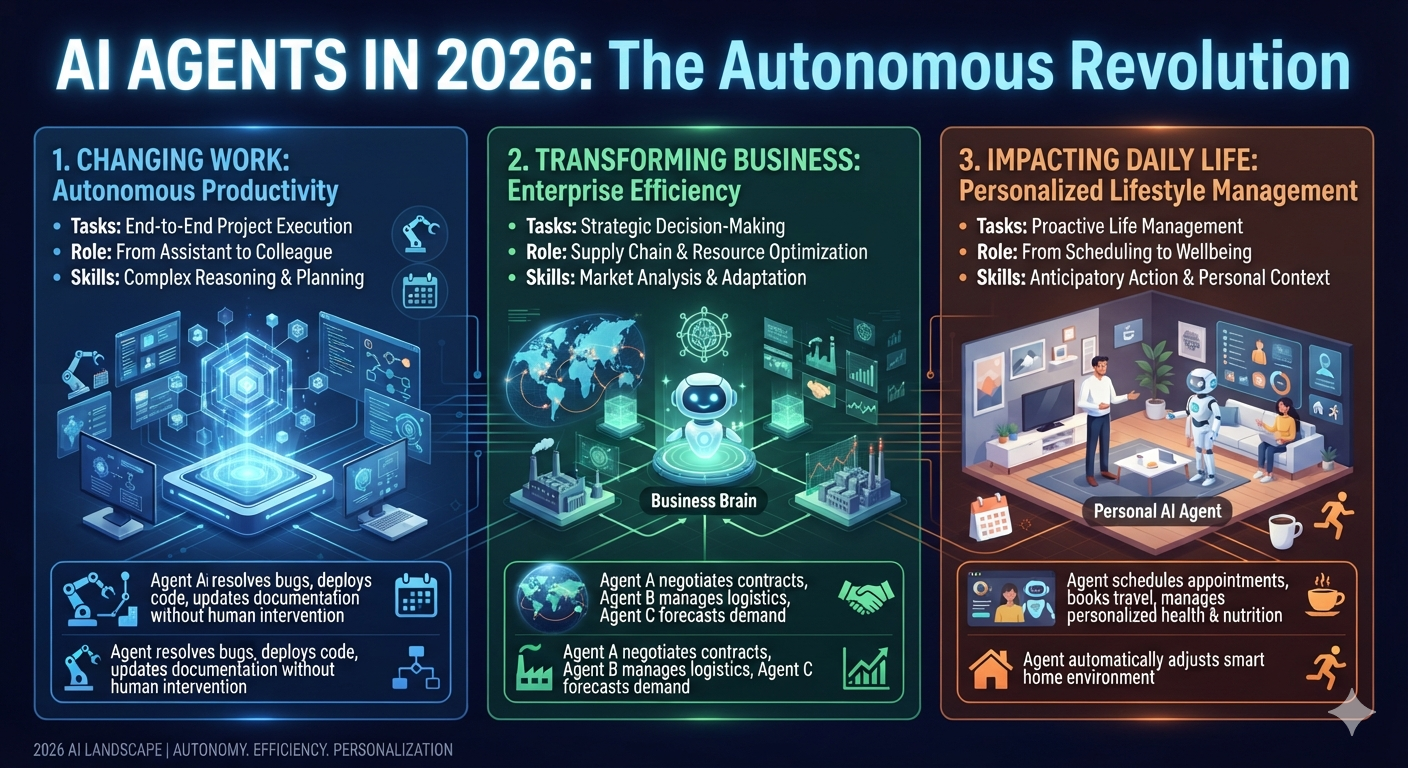
Artificial intelligence is entering a new era where technology can do more than answer questions. AI Agents in 2026 are becoming smarter digital partners that can understand goals, complete tasks, and support people in daily activities. Unlike basic tools, these AI agents can plan actions, use information, and improve workflows. They are helping businesses, students, and professionals save time with smarter automation.
From customer support to research and productivity, AI automation is changing how people use technology. These intelligent AI systems are becoming an important part of the future of artificial intelligence. In this guide, you will learn how AI agents work, their benefits, real-world examples, and why they are becoming one of the biggest technology trends of 2026.
What Are AI Agents in 2026?
Understanding What Are AI Agents
When people ask what AI agents are, they usually want to know how these systems are different from normal AI tools. An AI agent is a software system that can understand a goal, make decisions, use different tools, and complete tasks automatically. It works like a smart digital worker that can handle specific jobs without needing instructions every second.
Modern artificial intelligence agents combine language understanding, reasoning abilities, and automation features. They use machine learning systems to learn from information and improve their performance over time. For example, a normal chatbot can answer a customer question. However, an AI agent can answer the question, check a database, update information, and complete a task. This ability makes AI-powered agents more advanced than traditional digital assistants.
How AI Agents Are Different From Traditional AI Tools
Traditional AI tools usually perform one specific action. A writing tool creates text. A search tool finds information. A chatbot answers questions. However, AI agents can connect multiple actions together. They can create a plan and follow steps to reach a final goal. For example, imagine asking an AI agent to organize a business meeting. The agent may check your calendar, contact participants, prepare notes, and send reminders. This type of automation represents a major shift in AI technology trends 2026.
| Traditional AI Tools | AI Agents |
| Respond to commands | Work toward goals |
| Complete single tasks | Handle multiple steps |
| Limited decision-making | Advanced planning abilities |
| Require more human input | Need less supervision |
The growth of intelligent AI systems is changing how people interact with technology. Instead of using many different applications, users may soon rely on one smart agent that manages multiple tasks.
How Do AI Agents Work?
Understanding How AI Agents Work
Many people wonder how work because the technology feels complex. The basic idea is simple. An AI agent receives a goal, understands the request, creates a plan, and takes action. Behind the scenes, these systems use different technologies working together. Large language models help them understand human instructions. Memory systems help them remember important information. External tools allow them to perform actions. A modern agent usually follows a simple process:
| Stage | What Happens |
| Understanding | The AI receives a goal or request |
| Planning | It creates steps to complete the task |
| Action | It uses tools and information |
| Review | It checks results and improves |
These steps allow AI automation to move beyond simple responses.For example, a marketing team can use an AI agent to research customers, analyze trends, create reports, and suggest campaign ideas.
The Role of AI Workflows and Automation
The power of AI agents comes from their ability to manage connected tasks. This is called AI workflow automation.Instead of completing every step manually, people can give an AI agent a larger goal.A company may ask an agent to improve customer support. The agent can analyze customer messages, identify common problems, suggest solutions, and create reports.This type of AI task automation saves time and reduces repetitive work.Many organizations are investing in smart automation systems because they want faster operations and better productivity.
AI Agents vs Chatbots: What Is the Difference?
Comparing AI Agents vs Chatbots
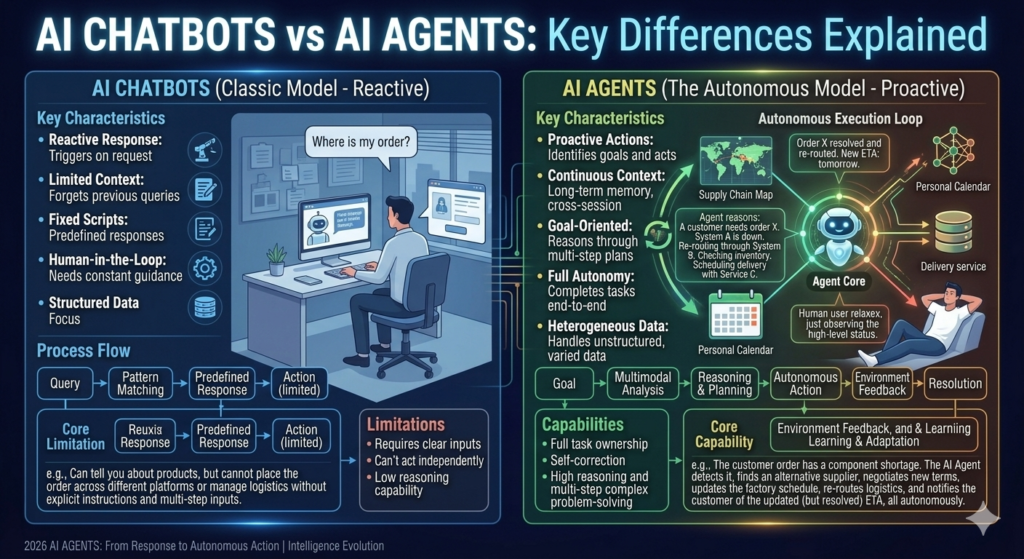
The difference between AI agents vs chatbots is becoming important as AI technology develops.Chatbots mainly focus on conversations. They answer questions based on available information. AI agents go further because they can take actions and complete tasks.For example, a chatbot may tell you a flight price. An AI agent may search flights, compare options, create a booking plan, and organize your travel schedule.
| Feature | Chatbots | AI Agents |
| Main purpose | Answer questions | Complete tasks |
| Planning ability | Limited | Advanced |
| Tool usage | Basic | Extensive |
| Automation | Low | High |
| Decision-making | Simple | More advanced |
Why AI Agents Are Becoming More Powerful
The rise of generative AI technology has improved the ability of machines to understand language and context.Modern advanced AI systems can analyze information, solve problems, and support complex workflows.However, chatbots still have value. They are useful for simple conversations and customer questions.AI agents are designed for situations where users need action, not only information.This difference explains why many companies are moving toward AI-powered solutions instead of relying only on basic chat systems.
AI Agents in 2026: What Are AI Agents and How They Will Change Work, Business, and Daily Life
Why AI Agents Are Becoming Popular in 2026
The Growing Demand for AI Automation
Technology is changing quickly. In 2026, people and companies are looking for smarter ways to save time and complete work faster. This is one major reason why AI agents are becoming popular across different industries.Unlike older software, modern AI assistants can handle complex tasks. They can understand instructions, analyze information, and provide useful results.The demand for AI automation tools is growing because businesses want better efficiency. Employees spend many hours on repetitive tasks. AI agents can reduce this workload by handling routine activities.For example, a company can use an AI agent to organize customer requests, prepare reports, and manage internal workflows. This allows employees to focus on creative and strategic work.The growth of AI technology trends 2026 shows that companies are moving toward smarter digital systems instead of basic automation.
Better AI Models Are Making Agents Possible
The improvement of AI models has created new possibilities. Earlier AI systems could only perform limited tasks. Modern systems can understand context, learn patterns, and make better decisions.Today, next-generation AI combines language models, automation, and data analysis capabilities. These improvements allow agents to complete more advanced tasks.For example, an AI agent can analyze a large amount of information and provide recommendations. It can also connect with different software platforms to complete workflows.This development represents a major step in the future of artificial intelligence.
| Technology Improvement | Impact on AI Agents |
| Better language understanding | More natural conversations |
| Improved reasoning | Better decisions |
| Faster processing | Quicker results |
| More integrations | More automation possibilities |
As AI continues to improve, AI innovation will create even smarter systems that support people in daily activities and professional environments.
How AI Agents Will Change the Future of Work
AI Agents as Digital Coworkers
The workplace is entering a new era. In the future, employees will work alongside AI systems instead of using technology only as a separate tool.AI in 2026 will act like digital coworkers that help people complete tasks faster. These agents can support many areas of work, including research, communication, planning, and analysis. For example, a manager may use an AI agent to summarize meetings, organize projects, and prepare reports. A writer may use an AI assistant to research topics and improve ideas. This does not mean humans become unnecessary. Instead, AI agents help people spend more time on tasks that require creativity and human judgment. This relationship between humans and machines is known as human-AI collaboration.
How Jobs and Skills May Change
Every major technology shift changes the way people work. AI agents will also create new requirements for employees.Workers who understand how to use AI tools will have new advantages. Companies will value people who can combine technical knowledge with creativity.For example, marketing professionals may use AI agents for research while focusing their own skills on strategy and storytelling.Professionals may use AI tools for productivity to manage their workload and improve performance.
| Work Area | How AI Agents Can Help |
| Research | Find and organize information |
| Communication | Create drafts and summaries |
| Planning | Manage schedules and tasks |
| Analysis | Understand large datasets |
The future workplace will likely focus on cooperation between humans and intelligent AI systems.
AI Agents for Businesses and Companies
How Businesses Use AI Agents
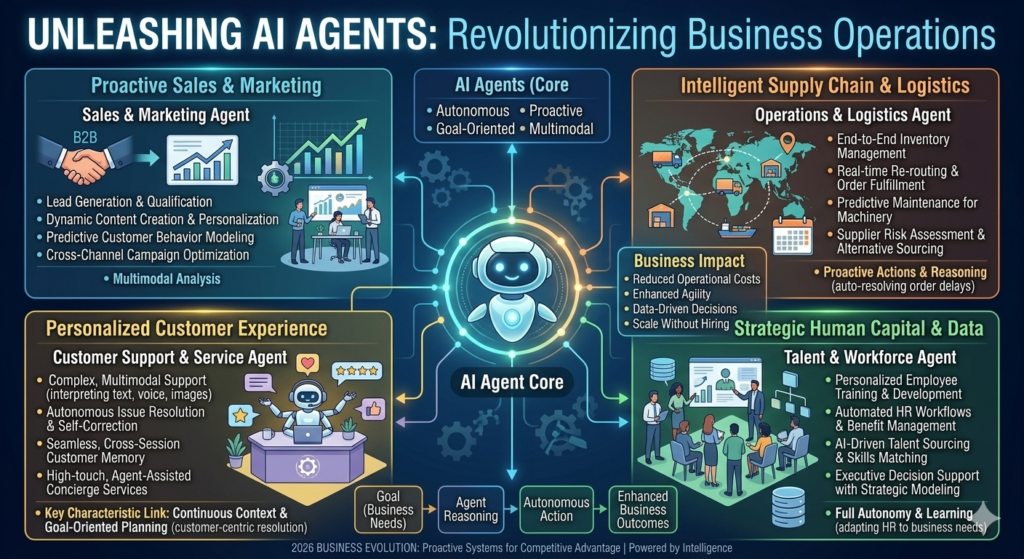
Businesses are among the biggest users of AI technology. Companies want solutions that improve efficiency, reduce costs, and create better customer experiences.AI agents for business can support different departments, from customer service to marketing.A company can use an AI agent to answer customer questions, analyze sales information, or manage daily operations.Many organizations are exploring AI-powered business automation because it allows teams to complete more work with fewer manual steps.
Common business applications include:
| Business Area | Usage |
| Customer Support | Answer questions and solve problems |
| Marketing | Analyze customers and create campaigns |
| Sales | Find leads and follow up |
| Finance | Organize data and create reports |
| Operations | Automate repetitive workflows |
These applications show why companies are investing in AI enterprise solutions.
AI Agents Improving Business Efficiency
Modern businesses generate huge amounts of data every day. Managing this information manually can take significant time.AI agents can analyze information and provide useful insights. They can identify patterns, predict customer behavior, and support decision-making.For example, an online store can use an AI agent to understand customer preferences. The system can suggest products and improve shopping experiences.Companies can also use AI customer service agents to provide faster support. These agents can handle common questions while human employees manage complex issues.Similarly, AI marketing automation helps businesses create better campaigns and reach the right audience.The result is a more efficient and responsive business environment.
How AI Agents Help Students and Professionals
AI Agents for Learning and Education
Education is another area where AI agents can create major changes. Students often spend hours searching for information, organizing notes, and preparing assignments.AI agents for students can act as personal learning assistants. They can explain difficult topics, suggest study plans, and help organize research.For example, a student preparing for an exam can use an AI agent to create a revision schedule and explain confusing concepts.AI research assistants can also help students find information faster and organize academic materials.
| Student Task | Support |
| Studying | Explain difficult concepts |
| Research | Find useful information |
| Planning | Create study schedules |
| Writing | Improve drafts |
However, students should use AI responsibly. AI should support learning, not replace personal understanding.
AI Agents for Professional Productivity
Professionals are also using AI agents to improve daily work. Many employees spend time managing emails, documents, meetings, and reports.AI agents can reduce this workload by organizing information and completing repetitive tasks.For example, a business professional can use AI project management tools to track deadlines and manage team activities.Developers can use AI coding assistants to improve programming workflows. Designers and writers can use AI content creation tools to generate ideas and improve productivity.These tools help professionals work smarter and achieve better results.
AI Agents in 2026: What Are AI Agents and How They Will Change Work, Business, and Daily Life
Real Examples of AI Agents in Daily Life
How AI Agents Are Becoming Personal Digital Helpers
Technology is becoming more personal. In the past, people used separate apps for different tasks. Now, AI personal assistants are bringing many activities together in one smart system.Modern AI agents can help people manage daily responsibilities. They can organize schedules, answer questions, find information, and complete online tasks.For example, imagine planning a family trip. A traditional app may only show flight information. An AI agent can compare flights, suggest hotels, create a schedule, and remind you about important details.These AI applications in daily life are becoming more common because they make everyday activities easier.
| Daily Activity | How Can Help |
| Travel planning | Find options and organize trips |
| Scheduling | Manage appointments and reminders |
| Shopping | Compare products and suggest choices |
| Finance | Track spending and create summaries |
| Smart homes | Control connected devices |
The goal of these systems is not to replace human decisions. Instead, they provide support and make daily tasks faster.
Future Daily Life With AI Agents
The future of technology will likely include more personalized AI experiences. Your AI assistant may understand your habits, preferences, and routines.For example, an AI agent could remind you about important tasks, suggest healthier habits, or help manage your personal goals.These digital AI assistants will become more useful as they connect with more services and devices.However, users will need to understand privacy settings and control what information they share.Responsible use will help people enjoy the benefits of AI-driven technology while protecting personal data.
Best AI Agent Tools to Watch in 2026
Leading AI Agent Platforms and Technologies
The AI industry is growing quickly. Many technology companies are developing advanced agent systems that can perform complex tasks.In 2026, several platforms are expected to influence the AI agent market. These tools are designed for individuals, developers, and businesses.
Some important categories include:
| Category | Purpose |
| AI productivity agents | Manage tasks and improve efficiency |
| Business automation agents | Automate company workflows |
| Research agents | Collect and organize information |
| Coding agents | Help developers create software |
| Customer agents | Improve customer support |
Companies are investing heavily in AI software solutions because intelligent automation can improve productivity.Modern AI platforms are also becoming easier for regular users. People no longer need advanced technical knowledge to use AI tools.
Choosing the Right AI Agent Tool
Selecting an AI agent depends on your goals. A student may need a research assistant, while a company may need business automation.
Before choosing a tool, consider:
| Factor | Why It Matters |
| Purpose | Choose according to your needs |
| Security | Protect personal information |
| Features | Check available capabilities |
| Integration | Ensure it works with existing tools |
| Cost | Match your budget |
The best tool is not always the most expensive one. It is the tool that solves your specific problem.As AI tools for companies continue improving, businesses will have more options for automation and growth.
Benefits of Using AI Agents
Improving Productivity and Saving Time
One of the biggest advantages of AI agents is productivity improvement.Many people spend hours completing repetitive tasks. AI agents can handle these activities and allow users to focus on important work.For example, an employee can use an AI agent to summarize documents instead of reading hundreds of pages manually.Professionals can use AI productivity software to organize work, manage information, and complete tasks faster.
| Benefit | How It Helps |
| Time savings | Reduces repetitive tasks |
| Better organization | Manages information efficiently |
| Faster research | Finds useful data quickly |
| Improved workflows | Connects multiple tasks |
These benefits make AI agents valuable for individuals and organizations.
Smarter Decisions Through AI Assistance
AI can analyze large amounts of information quickly. This ability helps people make better decisions. Businesses can use AI data systems to understand customer behavior. Professionals can use AI recommendations to improve their work. For example, companies can use AI data analysis tools to identify market trends and customer needs. AI do not replace human thinking. Instead, they provide information that helps people make smarter choices. This combination of human experience and machine intelligence creates stronger results.
Challenges and Risks of AI Agents
Privacy and Security Concerns
Although AI provide many benefits, they also create new challenges. Privacy is one of the biggest concerns. AI agents may need access to personal information, business data, or private documents to complete tasks. Users should always check how companies collect, store, and protect data. Businesses using AI systems should create strong security policies.
| Risk | Possible Solution |
| Data exposure | Use trusted AI platforms |
| Wrong information | Review AI results |
| Unauthorized access | Apply security controls |
| Privacy issues | Limit shared information |
Responsible management is important as AI technology becomes more powerful.
Accuracy and Human Control Issues
AI are improving, but they are not perfect. They can sometimes make mistakes or misunderstand information. For important decisions, human review remains necessary. For example, a company should not allow an AI agent to make major financial decisions without supervision. The best approach is cooperation. Humans provide judgment and experience. AI provides speed and automation. This balance will shape the responsible growth of autonomous systems.
AI Agents in 2026: What Are AI Agents and How They Will Change Work, Business, and Daily Life
AI Agents and the Future of Artificial Intelligence
The Next Stage of AI Development
Artificial intelligence is entering a new phase. Early AI systems focused on answering questions and recognizing patterns. Today, Are moving toward independent action and problem-solving. The future of artificial intelligence agents will focus on creating systems that understand goals, plan activities, and complete tasks with minimum guidance. These advanced AI systems will become more connected with businesses, software platforms, and everyday devices. For example, a future AI agent may manage a complete business workflow. It could analyze customer needs, create strategies, communicate with teams, and improve processes. This does not mean humans will lose control. Instead, the future will focus on better human-AI collaboration where people guide AI systems and use their strengths.
What the Future May Look Like With AI Agents
The next few years may bring major changes in how people interact with technology.AI agents may become personal digital partners that help with work, education, healthcare, and personal tasks.
Future possibilities include:
| Future Area | Possible Impact |
| Workplace | Automated business workflows |
| Education | Personalized learning support |
| Healthcare | Better patient assistance |
| Shopping | Smarter recommendations |
| Software | Faster development processes |
The growth of AI innovation will continue creating new opportunities.However, successful adoption will depend on trust, security, and responsible development.The goal is not to create machines that replace humans. The goal is to build AI-powered solutions that help people achieve more.
How to Start Using AI Agents Today
Steps Beginners Can Follow
Many people think AI are only for technology experts. However, beginners can start using them with simple tasks. The first step is identifying activities that take too much time. These can include organizing information, managing schedules, or researching topics. After finding a suitable task, choose an AI tool that matches your needs.
A simple approach looks like this:
| Step | Action |
| 1 | Identify repetitive tasks |
| 2 | Choose a trusted AI agent tool |
| 3 | Test small workflows |
| 4 | Review results |
| 5 | Improve your process |
Starting small helps users understand how AI agents work without feeling overwhelmed. Students can explore for students to improve learning. Professionals can use AI tools for professionals to increase productivity. Businesses can begin with simple automation before moving toward larger AI enterprise solutions.
Best Practices for Using AI Agents
Using AI effectively requires responsible habits. Always review important information before making decisions. AI can provide useful assistance, but human judgment remains important. Users should also protect personal information and choose reliable platforms.
Good practices include:
| Practice | Benefit |
| Check AI results | Reduces mistakes |
| Protect data | Improves privacy |
| Learn AI skills | Creates better results |
| Use trusted tools | Increases security |
When used correctly, AI agents can become valuable partners for work and daily activities.
Final Thoughts on AI Agents in 2026
Why AI Agents Will Matter in the Future
The rise of AI in 2026 represents a major change in technology. These systems are moving beyond simple conversations and becoming powerful tools for completing real tasks. From businesses to classrooms, AI agents are helping people save time, improve productivity, and make better decisions. The biggest difference is their ability to act. They can plan, analyze, and complete workflows instead of only providing information. As AI automation, AI workflows, and smart automation systems continue developing, more people will use AI agents in their professional and personal lives. The future will not be about humans competing with machines. It will be about people using intelligent technology to work smarter. Those who learn how to use AI agents today will be better prepared for the digital world of tomorrow.
FAQs About AI Agents in 2026
What are AI agents?
AI agents are intelligent software systems that understand goals, make plans, and complete tasks automatically. They use artificial intelligence to support users in different activities.
How do AI agents work?
AI agents work by understanding instructions, creating plans, using tools, and completing actions. They combine language models, data, and automation features.
What is the difference between AI agents and chatbots?
The main difference in AI agents vs chatbots is that chatbots mainly answer questions, while AI agents can perform tasks and make decisions.
Are AI agents useful for businesses?
Yes. AI for business can improve customer service, marketing, sales, data analysis, and daily operations.
Can students use AI agents?
Yes. AI for students can help with research, learning, organization, and study planning when used responsibly.
Will AI agents replace human jobs?
AI agents may change some tasks, but they are more likely to support workers by improving productivity and creating new opportunities.
Meta Description
Discover how AI agents in 2026 work and how they will transform work, business, and daily life with automation, productivity tools, and intelligent AI solutions.
9 Comments