

Paid advertising can bring your business in front of people who are ready to buy. It can also waste money when you target the wrong audience or choose the wrong campaign. The difference comes down to planning, testing and measurement.
In 2026, US businesses have several ways to advertise online. Google Ads can reach people searching for a solution. Facebook and Instagram can introduce products to new audiences. YouTube and TikTok can use video to build interest and encourage action.
This guide explains how each platform works. You’ll learn how to choose the right channel, understand advertising costs, set a budget and measure real results. It also includes practical examples for small businesses, online stores and service providers.
What Is Paid Advertising and How Does It Work?
Paid Advertising is a marketing method where businesses pay to promote their products, services or messages. These promotions can appear on search engines, websites, apps and social media. The goal is to reach people who may become customers.
You may see these promotions while searching Google or watching a video. They usually carry an Ad or Sponsored label. Businesses pay through different models, including Pay Per Click Advertising, impressions, views and conversions.
Paid Advertising vs. Traditional Advertising
Traditional advertising uses channels such as television, radio, newspapers and billboards. These channels can reach large audiences, but targeting and tracking may be limited. Online Advertising gives businesses more control over audiences, locations and campaign goals.
Digital Advertising also provides detailed reports. You can measure clicks, website visits, calls and purchases. However, digital campaigns still need careful planning. Better tracking does not automatically make an advertisement profitable.
How the Paid Advertising Auction Works
Many advertising platforms use auctions to decide which advertisements appear. Advertisers compete for available placements. The platform considers bids, relevance, quality and other signals. Google explains that its Ad Rank can include bid amount, ad quality, landing page experience, competition and search context. <Cite refs={[“turn238248search1″,”turn238248search7”]}/>
This means the highest bidder does not always win. A useful advertisement can compete with a larger advertiser when its message and landing page match the customer’s needs. Learn more in Google’s official guide to the Google Ads auction.
How Paid Advertising Helps Businesses Get More Customers
A strong campaign puts your offer in front of people who may need it. Someone searching for a roof repair company has a different level of interest from someone watching a cooking video. Understanding that difference helps businesses choose better advertising channels.
The main Paid Advertising Benefits include faster audience reach, measurable results and control over campaign spending. Businesses can also test different offers before investing heavily. However, results depend on the product, competition, targeting and customer experience.
Reaching Customers Who Are Ready to Buy
Search campaigns can reach people who already know what they need. For example, someone searching for “emergency plumber in Austin” may want help immediately. A local plumbing company can show a relevant advertisement with its service area and phone number.
This is an example of Paid Search Marketing. It works best when the search term reflects a real need. Broad searches may attract visitors who are only researching, so keyword selection matters.
Building Brand Awareness and Generating Leads
Not every customer is ready to buy during the first visit. Some people need to compare prices, read reviews or understand a product. Social and video campaigns can introduce your business before customers begin searching for it.
Lead Generation Ads can collect enquiries through a platform form or website. A home renovation company, for example, could offer a free estimate. It should then follow up quickly and check whether each enquiry is a genuine sales opportunity.
5 Major Types of Paid Advertising You Should Know
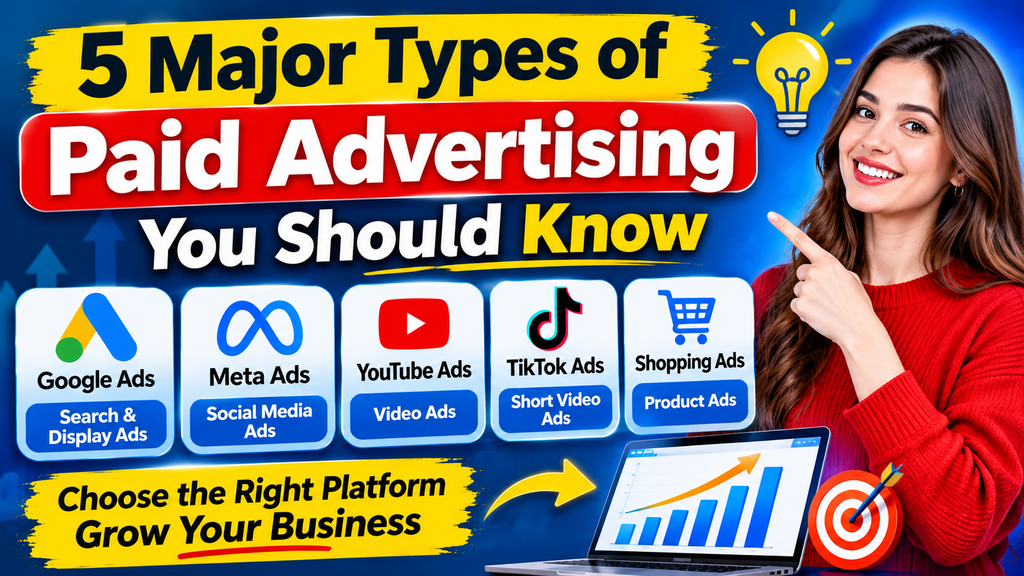
Different advertising formats serve different purposes. Search ads reach people with active intent. Display and video ads can introduce a brand. Shopping ads show products, while social campaigns help businesses reach people based on interests and behavior.
These formats are common parts of modern Paid Media plans. Some businesses use one format at first. Others combine several channels to reach customers at different stages of the buying process.
Google Search Ads
Search ads appear on search engine results pages when people look for relevant terms. A user searching for “buy running shoes online” may see sponsored product or store results. These ads can send visitors directly to a product or service page.
Their strength is intent. People have already shown interest through a search. However, advertisers need relevant keywords and useful landing pages. Paying for clicks from unrelated searches can quickly drain a budget.
Google Display Ads
Display Advertising uses visual ads across websites and apps that participate in Google’s advertising network. These ads may contain images, text or responsive creative assets. They can help businesses reach people while they browse other content.
Display campaigns often suit awareness and remarketing goals. For example, a furniture store could remind previous website visitors about a sofa collection. The campaign still needs frequency controls and relevant creative to avoid annoying the audience.
Google Shopping Ads
Shopping Ads show product information such as images, prices and store names. They can appear in Google Shopping and other eligible Google placements. These advertisements are useful when customers compare products before buying.
Retailers generally manage product information through Google Merchant Center. Product titles, images, prices and availability should match the website. Incorrect product data can create disapproval issues or disappoint customers after a click.
Social Media Advertising
Paid Social Advertising allows businesses to promote content across social platforms. Facebook and Instagram are major options for US advertisers. These platforms can help brands reach people who may not be searching for their products yet.
A clothing store might promote a new collection through short videos and carousel ads. A local gym could advertise a trial membership to nearby residents. Good creative and a clear offer matter more than simply posting attractive images.
Video Advertising
Video Advertising uses moving images and sound to explain products, demonstrate services or build brand recognition. YouTube and TikTok are important channels. Video can show how something works in a way that a static image may not.
A software company could show a short product demonstration. A home improvement business could show a project before and after completion. The video should capture attention early and make the next step clear.
Google Ads in 2026: How to Reach People Searching for Your Products
Google Ads gives businesses access to several campaign types. These include Search, Display, Shopping, Video and Performance Max. Each option serves a different purpose. The right choice depends on your goal, product and available creative assets. <Cite refs={[“turn238248search3”]}/>
A focused Google Ads Campaign should begin with one clear objective. A dentist may want appointment calls. An online store may want purchases. A software company may want qualified demo requests. Campaign settings should reflect the action that creates business value.
Choosing the Right Google Ads Campaign Type
Search campaigns can reach people looking for a product or service. Display campaigns can build awareness across websites and apps. Shopping campaigns can promote product listings. Video campaigns can reach YouTube viewers, while Performance Max can access multiple Google channels.
Google’s campaign type guide explains the available options. Performance Max uses Google’s automation across eligible channels. It still needs suitable goals, accurate conversion data and useful creative assets.
Google Ads Keyword Research and Search Intent
Keyword Targeting helps advertisers connect ads with relevant searches. A company selling custom kitchen cabinets should consider phrases that show buying intent. Searches for “custom kitchen cabinets cost” may be more valuable than broad searches about kitchen design.
Negative keywords can prevent ads from appearing for unwanted searches. A paid repair company might exclude terms such as “free repair course” if those searches do not bring customers. Review actual search terms regularly because keyword matching can reach related queries.
Google Ads Bidding and Budget Management
Advertising Bidding Strategies tell Google how to use your budget. Some strategies focus on clicks, while others aim for conversions or conversion value. Automated bidding can help when the account has reliable data and a suitable goal.
Do not choose a bidding strategy only because it sounds advanced. A new campaign with poor conversion tracking may send the system weak signals. Start with a realistic goal and check whether the campaign is recording meaningful actions.
Google Ads Conversion Tracking
Conversion Tracking connects advertising activity with actions on your website or business. These actions may include purchases, calls, form submissions or app installs. Without tracking, you may know how many people clicked but not what happened afterward.
Google supports several conversion types, including website actions, phone calls, app activity and offline conversions. Read its conversion tracking guide before launching campaigns. <Cite refs={[“turn814865search11”]}/>
Facebook and Instagram Ads: How to Find the Right Audience
Facebook Advertising and Instagram Advertising run through Meta’s advertising tools. Businesses can use them to promote products, collect leads and build awareness. These channels are useful when customers discover products while browsing social content.
For example, a US skincare brand could show a product demonstration to people interested in its category. The advertisement should explain the product’s real benefits. It should also send visitors to a page that answers common questions.
How Meta Ads Manager Works
Meta Ads Manager organizes campaigns around objectives, audiences, placements and advertisements. Advertisers set the overall goal and then create the audience and creative settings. This structure helps businesses manage different offers and customer groups.
Before launching, check the destination URL, budget, tracking and creative preview. A small setup error can affect the whole campaign. Meta’s official learning resource is available through Meta Blueprint.
Facebook and Instagram Audience Targeting
Audience Targeting helps businesses decide who may see their ads. Options can include location, age, interests and custom audiences. Available controls vary by campaign and platform updates. Advertisers should review the current settings inside Ads Manager.
Demographic Targeting can help when a product serves a clear age group or location. Interest-Based Targeting can help introduce products to people with relevant interests. Avoid making assumptions about customers. Test audience groups and judge them by actual results.
Facebook and Instagram Ad Formats
Meta supports different creative formats across its placements. These include single images, videos, carousels, Stories and Reels. A carousel can show several products. A short video can demonstrate how one product solves a problem.
The best format depends on the message. A restaurant may use food images to promote a new menu. A fitness studio may use a short class video. Keep the main offer visible and make the next step easy.
How to Improve Meta Advertising Performance
Strong creative is only one part of the campaign. Your offer, audience, landing page and follow-up process also affect results. Test different messages and formats rather than assuming one advertisement will work for everyone.
Track purchases, qualified leads or other useful actions. Likes and comments can show engagement, but they do not prove sales. A campaign with fewer clicks may still be more profitable if it attracts better customers.
YouTube Advertising: How to Turn Video Views into Customers
YouTube Ads help businesses reach people while they watch or discover video content. A company can use them to explain a product, show a customer problem or introduce its brand. YouTube campaigns can support awareness, consideration and sales goals.
A US accounting software company might show a short demonstration to small business owners. The video can explain one useful feature and invite viewers to book a demo. The landing page should continue the same message.
Types of YouTube Ads
Google lists several formats, including skippable in-stream, non-skippable in-stream, in-feed, bumper, Masthead and Shorts ads. Each format offers a different viewing experience. Some appear before videos, while others appear in discovery feeds or Shorts. <Cite refs={[“turn238248search0”]}/>
| YouTube ad format | Main use |
|---|---|
| Skippable in-stream | Explain an offer with an option to skip |
| Non-skippable in-stream | Deliver a short message viewers cannot skip |
| In-feed video | Encourage people to choose and watch a video |
| Bumper ads | Share a brief brand message |
| Shorts ads | Reach viewers in the Shorts experience |
| Masthead | Gain prominent YouTube homepage exposure |
Check Google’s official video ad format guide for current requirements and availability.
YouTube Audience Targeting
Advertisers can use audience signals and campaign settings to reach relevant viewers. These may include demographics, interests, custom segments and remarketing options. The exact choices depend on campaign type and current platform rules.
A home security company could reach people researching home improvement topics. It should still measure whether viewers visit the website or request a quote. Video views alone cannot show whether the campaign generates customers.
Creating YouTube Ads That Generate Results
The first few seconds should give viewers a reason to keep watching. Start with a problem, useful demonstration or clear benefit. Avoid long introductions that delay the main message.
Show the product in use whenever possible. Add readable captions and a clear call to action. A viewer should understand what the business offers even when watching without sound.
TikTok Advertising: How to Reach New Audiences with Short Videos
TikTok Ads help businesses reach people through short-form video and other available placements. They can support awareness, traffic, lead generation and sales. TikTok works especially well when a product can be shown through a quick demonstration or relatable story.
For example, a kitchen product brand could show a simple before-and-after demonstration. The video should feel clear and useful rather than like a long sales pitch. Its landing page must provide the details needed to make a purchase.
TikTok Ads Manager and Campaign Objectives
TikTok Ads Manager groups campaigns around objectives such as awareness, consideration and conversion. Available options include reach, traffic, video views, lead generation and sales. The right objective depends on what you want people to do. <Cite refs={[“turn814865search0″,”turn814865search3”]}/>
A traffic campaign aims to bring people to a destination. A sales campaign aims to drive purchases. These are not the same result. Read TikTok’s campaign objective guide before selecting a goal.
TikTok Ad Formats and Spark Ads
TikTok offers several advertising options, including In-Feed Ads and Spark Ads. Spark Ads can promote eligible organic TikTok posts while keeping their original engagement context. This can help brands promote content that already connects with viewers. <Cite refs={[“turn238248search6”]}/>
A business should choose content that fits its audience and product. A creator-style demonstration may suit a consumer product. A direct offer may work better for a time-sensitive promotion. Check TikTok’s Spark Ads information for current requirements.
How to Create TikTok Ads That Attract Customers
Start with a clear visual hook. Show the product, problem or result early. Keep the message focused on one main benefit. Use captions so viewers can follow the video without relying on sound.
Test different openings and demonstrations. Avoid copying trends that have no connection to your offer. A video may receive views without generating sales. Track website actions and customer quality before increasing the budget.
Google Ads vs Meta Ads vs YouTube Ads vs TikTok Ads
Each platform reaches people in a different situation. Google often connects businesses with active searches. Meta can introduce products during social browsing. YouTube offers longer demonstrations, while TikTok supports discovery through short videos.
There is no universal winner. A local emergency service may benefit from Google Search. A fashion brand may use Meta and TikTok to show new products. A software company may combine search campaigns with educational YouTube videos.
| Platform | Strong use case | Common formats |
|---|---|---|
| Google Ads | Reaching people searching for solutions | Search, Display, Shopping, Video |
| Local reach and broad audience campaigns | Image, video, carousel | |
| Visual products and brand discovery | Reels, Stories, image, carousel | |
| YouTube | Demonstrations and video awareness | In-stream, in-feed, Shorts |
| TikTok | Short-form discovery and product demonstrations | In-Feed, Spark Ads |
Which Advertising Platform Has the Highest Buying Intent?
Search advertising often reaches people who already know what they want. Someone searching for “buy office chairs online” may be closer to purchasing than someone casually watching a video. However, search intent does not guarantee a sale.
Social and video campaigns can create demand before a customer searches. They may also help people remember a brand. Choose based on the buying journey rather than assuming one channel always produces better customers.
Which Platform Is Best for Different Business Models?
An online store may benefit from Shopping and social campaigns. A local plumber may need search ads and location-based campaigns. A B2B software company may use search, video and professional content to explain a complex product.
Think about where your customers look for answers. Then choose a platform that fits their behavior. Your product price, sales cycle and profit margin should also guide the decision.
How Much Does Paid Advertising Cost in 2026?
Paid Advertising Costs vary by industry, location, competition and campaign goal. Google Ads, Facebook, Instagram, YouTube and TikTok do not share one standard price. Costs can also change during the year as demand and competition shift.
For US search campaigns, WordStream’s 2026 benchmark study analyzed more than 13,000 campaigns from April 2025 through March 2026. It reported an average CPC of $5.42, a 6.64% CTR, an 8.18% conversion rate and a $66.69 cost per lead. These are broad study averages, not promises or targets for every advertiser. <Cite refs={[“turn238248search2″,”turn238248search4”]}/>
Average Google Ads Costs in the USA
Google Ads Pricing depends heavily on the search terms and industry. A competitive legal keyword may cost far more than a low-competition local search. A national campaign may also face different competition from a small city campaign.
WordStream’s figures offer a useful reference point, but your own results may differ. Review the 2026 Google Ads benchmarks by industry. Use your profit margins and lead quality to decide whether a click is worth its price.
Facebook and Instagram Advertising Costs
Facebook Ads Cost and Instagram Ads Cost depend on the audience, creative, objective and competition. Advertisers may pay based on impressions or other campaign delivery models. A broad awareness campaign should not be compared directly with a campaign optimized for purchases.
A low cost per click is not always a good result. If visitors leave without taking action, the campaign may still lose money. Compare cost per qualified lead or purchase when those are your actual goals.
YouTube and TikTok Advertising Costs
YouTube Advertising Cost varies by format, bidding method, audience and campaign objective. Some video campaigns focus on views or reach. Others aim to generate website actions. Their costs should be judged against the result each campaign was designed to produce.
TikTok Advertising Cost also changes with targeting, creative, placements and competition. A video view campaign and a sales campaign have different goals. Check the current platform forecasts and reporting before setting expectations.
What Influences Paid Advertising Costs?
Competition is one major factor. Other influences include location, season, audience size, creative quality and landing page experience. A campaign targeting a major US city may face different auction pressure from one serving a smaller area.
Your offer matters too. If customers do not understand the value, they may ignore the ad. Clear messaging and relevant landing pages can improve performance without simply raising bids.
7 Important Paid Advertising Metrics Every Business Should Track
Good reporting shows whether your campaigns help the business. Advertising Performance Metrics connect spending with attention, leads and sales. They also help you find where customers leave the buying process.
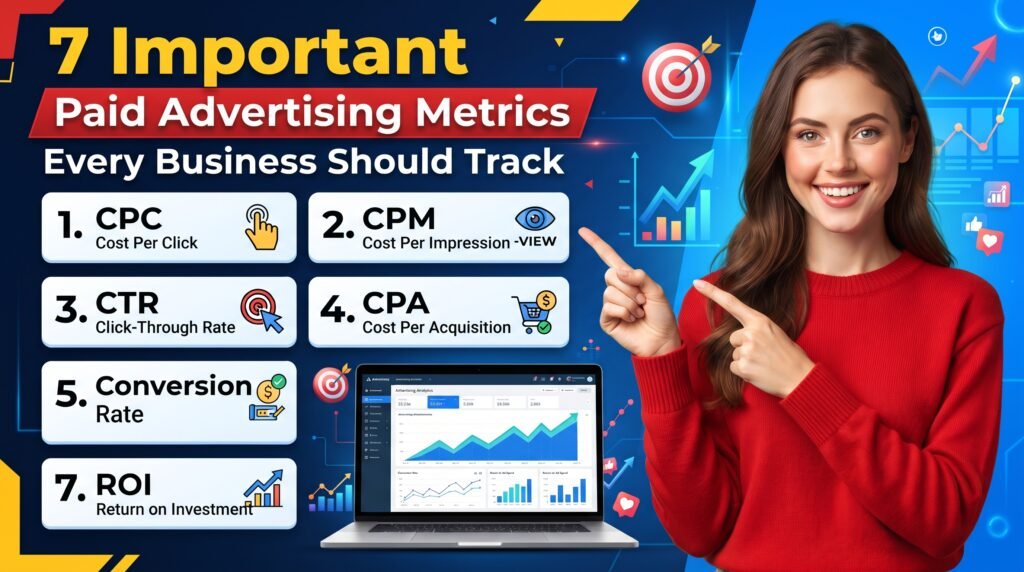
Do not judge a campaign by one number. A high CTR can look impressive while sales remain low. Review several metrics together and compare them with your business goals.
| Metric | What it tells you |
|---|---|
| CPC | Average cost of a click |
| CPM | Cost for 1,000 impressions |
| CTR | Share of impressions that receive clicks |
| CPA | Cost of a defined acquisition or action |
| Conversion rate | Share of visitors who convert |
| ROAS | Revenue compared with ad spend |
| ROI | Return after considering relevant costs |
Cost Per Click (CPC)
Cost Per Click shows the average amount paid for each click. Calculate it by dividing total advertising spend by the number of clicks. If you spend $300 and receive 100 clicks, your average CPC is $3.
CPC helps compare traffic costs. However, it does not tell you whether visitors become customers. A more expensive click may be worthwhile if it brings higher-value sales.
Cost Per Thousand Impressions (CPM)
Cost Per Impression is commonly discussed through CPM, which means cost per thousand impressions. It measures how much an advertiser pays to show an ad one thousand times. It is useful for campaigns focused on reach and awareness.
For example, spending $200 for 40,000 impressions gives a $5 CPM. This figure does not show how many people remembered the brand or bought something. Use it with other measures.
Click-Through Rate (CTR)
Click-Through Rate measures the share of impressions that result in clicks. Divide clicks by impressions and multiply by 100. If an ad receives 500 clicks from 10,000 impressions, its CTR is 5%.
A low CTR may point to weak creative, poor targeting or an unclear offer. A high CTR is not enough on its own. Check whether those clicks lead to useful actions.
Cost Per Acquisition (CPA)
Cost Per Acquisition measures the average cost of getting a defined result. That result might be a purchase, booked appointment or qualified lead. Divide campaign spend by the number of those conversions.
If you spend $600 and gain 12 customers, your CPA is $50. Make sure you count real customers when measuring customer acquisition. A newsletter signup should not be treated as a sale.
Conversion Rate
Ad Conversion Rate shows how many visitors complete the action you want. If 200 people visit a landing page and 10 submit a form, the conversion rate is 5%.
A weak rate may point to a confusing offer, slow page or poor audience match. Review the full customer journey before changing the advertisement. Sometimes the problem begins after the click.
Return on Ad Spend (ROAS)
Return on Ad Spend compares revenue from advertising with the money spent on ads. If a campaign spends $1,000 and generates $4,000 in tracked revenue, its ROAS is 4:1.
That does not mean the business made $3,000 in profit. Product costs, shipping, payroll and other expenses still matter. Use ROAS to understand revenue efficiency, not as a complete profit calculation.
Advertising Return on Investment (ROI)
Advertising ROI considers the return after relevant costs. A business should include the costs that matter to its calculation. These may include product costs, service delivery, agency fees and advertising spend.
For example, a campaign may produce strong revenue but weak profit. ROI helps reveal that difference. Agree on the calculation before comparing campaigns so everyone uses the same figures.
How to Set a Realistic Advertising Budget
Your Advertising Budget should reflect your business goals and ability to serve new customers. A small company does not need to copy a large competitor. It needs enough money to test a clear offer and collect useful data.
Marketing Budget Allocation should leave room for testing and improvement. Do not spend everything on one advertisement. Keep track of campaign costs and check whether new customers generate enough value to support continued spending.
Start With Your Business Goals
Decide what the campaign must achieve. You may want purchases, phone calls, booked appointments or qualified leads. Each goal requires a different measurement plan.
A local dentist may value booked appointments more than website visits. An online retailer may focus on completed orders and revenue. Set the goal before choosing the platform.
Calculate What You Can Afford to Spend
Start with the amount your business earns from a typical customer. Then consider product costs, delivery costs and other expenses. This helps you estimate the maximum acquisition cost your business can support.
Customer Acquisition Cost includes the spending required to gain customers. If a customer brings $500 in revenue but only $100 in gross profit, paying $150 to acquire that customer may not make sense. Use profit rather than revenue alone.
Reserve Money for Testing and Optimization
A new campaign needs room to learn. You may need to test different messages, audiences and landing pages. Set aside part of your budget for these tests instead of putting everything behind one creative.
Change one major factor at a time when possible. This makes results easier to understand. If you change the audience, offer and landing page together, you may not know which change caused the result.
How to Choose the Right Advertising Platform for Your Business
Choosing among Paid Advertising Platforms starts with understanding your customer. Think about what people do before buying. They may search Google, watch product reviews, browse Instagram or ask friends for recommendations.
Your business model matters as well. A local service company may need phone calls from a limited area. An online retailer may need product views and purchases across the country. Choose the channel that supports the actual buying process.
Choose Platforms Based on Customer Intent
Search campaigns can work well when people actively look for a service. Social campaigns can help when customers discover products while browsing. Video campaigns can explain products that need more education.
A company selling emergency water damage services should focus on urgent search demand. A new clothing brand may need visual campaigns to introduce its products. Match the channel with the customer’s situation.
Consider Your Product and Sales Cycle
Low-cost products may sell after a short visit. Expensive products often require more research and trust. B2B services may involve several people before a company makes a decision.
Your campaign should reflect that process. A software business might use educational videos and follow-up campaigns. A local coffee shop may need simple location-based promotions.
Start With One Platform Before Expanding
Trying every channel at once can spread a small budget too thin. Start with the platform that best matches your customer and goal. Build a working campaign before adding more channels.
Once you understand your costs and conversion quality, test another platform. Keep separate tracking for each channel. This helps you understand which campaigns bring valuable customers.
How to Create an Effective Paid Advertising Campaign
Strong Online Ad Campaigns begin with a clear goal and a useful offer. The advertisement, audience and landing page should support the same message. If they do not match, visitors may leave before taking action.
Good Advertising Campaign Management also requires regular checks. Review spending, tracking and customer quality. Do not make large changes every few hours. Give each test enough time and data to produce a useful comparison.
Define One Clear Campaign Objective
Choose one main action for the campaign. It could be a purchase, a phone call or a qualified enquiry. Avoid treating views, clicks and sales as equal outcomes.
A home cleaning company might want quote requests from local homeowners. Its campaign should optimize toward that goal where the platform supports it. Measure the quality of enquiries as well as their total number.
Research Your Target Audience
Learn what customers need and what stops them from buying. Read customer questions, sales conversations and product reviews. These sources can reveal the language people use when describing their problems.
Use Geographic Targeting when location matters. A roofing company may serve selected counties rather than the entire United States. Make sure the campaign location settings match the real service area.
Create a Strong Ad Message and Offer
Clear Ad Copywriting explains what you offer and why it matters. Focus on a real customer benefit. Avoid vague claims such as “best service ever” unless you can support them.
Your Advertising Creatives should make the offer easy to understand. Use a relevant image or video and a clear call to action. If you offer a free estimate, explain what the estimate includes.
Build a Landing Page That Converts
Landing Page Optimization helps visitors complete the action after clicking. The page should match the advertisement. It should explain the offer, answer important questions and make the next step easy.
A local contractor should show its service area, contact details and quote form. An online store should show product images, price, delivery details and returns information. Avoid sending every visitor to a generic homepage.
Launch, Test and Monitor the Campaign
Check your links, budget, audience settings and tracking before launch. Test the form or purchase process yourself. Make sure conversions appear in the right reporting tools.
Review early delivery for errors and unexpected spending. Then judge performance using enough data to make a fair decision. A few clicks cannot prove that a campaign will succeed or fail.
6 Common Paid Advertising Mistakes That Waste Your Budget
Many campaigns struggle because the setup does not match the business goal. An advertisement may attract attention but fail to bring customers. The solution is to review the entire path from targeting to follow-up.
Avoid changing everything at once. Find the weak point first. It may be the keyword, creative, landing page or sales process. Each problem needs a different fix.
Targeting an Audience That Is Too Broad
Broad targeting can bring visitors who have little interest in your offer. A local service business should not pay for clicks from places it cannot serve. A specialist product may also need a more relevant audience.
Start with clear customer and location settings. Then review results and adjust based on actual performance. Do not narrow the audience so much that the campaign cannot reach enough people.
Choosing the Wrong Campaign Objective
A traffic objective aims to bring visitors. It does not automatically find people who are most likely to buy. If your goal is sales, use a suitable sales or conversion objective when available.
Choose the result that matters to the business. Track it properly. Otherwise, the platform may optimize toward an action that looks good in reports but has little commercial value.
Ignoring Negative Keywords and Placement Quality
Search campaigns can match queries that do not fit your offer. Negative keywords help prevent some unwanted searches. Review the search terms report and exclude irrelevant phrases where appropriate.
Also check where display and video ads appear. Poor placements may bring low-quality traffic. Do not assume every impression has the same value.
Sending Visitors to Weak Landing Pages
A strong advertisement cannot fix a confusing website. Slow loading, missing information and unclear forms can drive visitors away. Customers need to understand the offer and trust the business.
Check the page on a phone as well as a computer. Make the main action visible. Remove distractions that do not help visitors decide.
Failing to Track Conversions
Without conversion data, you cannot see which campaigns produce valuable actions. You may keep spending on ads that bring clicks but no customers. Set up tracking before launching.
Track the actions that matter. These might include purchases, calls, booked appointments or qualified forms. Test each conversion event to confirm that it records correctly.
Changing Campaigns Without Enough Data
Frequent changes can make performance difficult to understand. If you change the budget, audience and creative every day, you may not know what caused a result.
Set a review schedule that fits your budget and traffic volume. Make changes when the data supports them. Avoid reacting to every short-term increase or drop.
How to Measure and Improve Advertising Results
Campaign Optimization means using performance data to improve results. Start by finding where the campaign loses potential customers. Then test a change that addresses that specific problem.
Your Digital Marketing Campaigns should support real business outcomes. Compare campaign spending with qualified leads, sales and profit. This gives you a better view than clicks or impressions alone.
Find Where Your Campaign Is Losing Customers
Review the journey from impression to sale. If impressions are low, your targeting or budget may limit reach. If clicks are low, the message or creative may need work. If visitors leave quickly, inspect the landing page.
If leads arrive but sales do not, review lead quality and follow-up. The advertisement may be doing its job. The sales process could be the real problem.
Test Ad Copy, Creative and Landing Pages
Test different headlines, images, videos and offers. Keep the test focused so you can understand the result. Use enough traffic to make a useful comparison.
Do not declare a winner after a handful of clicks. Small samples can produce misleading results. Record what you changed and what happened afterward.
Improve Campaigns Using Conversion Data
Use conversion data to identify audiences and messages that bring valuable customers. You may find that one location produces more qualified leads. Another audience may bring cheap clicks but few sales.
Adjust budgets carefully. Check whether the change improves total results rather than one metric alone. Keep a record of major changes so you can understand performance over time.
Know When to Pause or Scale a Campaign
Pause a campaign when it consistently misses its goal and you have checked the tracking and setup. Do not pause only because one day performed poorly. Look at enough data to understand the pattern.
Scale campaigns gradually when results are stable and profitable. Watch customer quality as spending increases. A campaign that works with a small audience may behave differently at a larger budget.
Paid Advertising for Small Businesses: A Practical Example
Paid Advertising for Small Businesses should start with a clear service, location and customer need. A small company does not need a complicated campaign to begin. It needs a useful offer and a way to measure enquiries.
Consider a fictional HVAC company in Phoenix, Arizona. It wants more AC repair calls during the hot season. It chooses Google Search because local customers may search for repair services when their systems stop working.
Example: A Local HVAC Company Running Google Ads
The company targets searches related to AC repair in the areas it serves. It excludes unrelated searches about jobs, training and do-it-yourself instructions. Its advertisement explains the service and gives customers a direct way to call.
The landing page lists service areas, contact details and the repair process. It does not promise a result the company cannot guarantee. Calls are tracked so the owner can review which searches bring useful enquiries.
Example Budget and Campaign Performance
Assume the company spends $1,500 in one month. It receives 250 clicks and 20 tracked enquiries. Of those enquiries, 12 become booked jobs. These figures are illustrative, not a market benchmark.
| Campaign result | Example figure |
|---|---|
| Monthly ad spend | $1,500 |
| Clicks | 250 |
| Enquiries | 20 |
| Booked jobs | 12 |
| Cost per enquiry | $75 |
| Cost per booked job | $125 |
The campaign’s cost per booked job is $125. The owner must compare that cost with the gross profit from each job. If the average job cannot support the acquisition cost, the company needs to improve its offer, conversion rate or campaign efficiency.
Lessons Other Small Businesses Can Apply
Start with one service or product that has clear demand. Choose a channel that reaches people likely to need it. Track actual customers rather than counting every form submission as a successful sale.
Small businesses should also respond to enquiries quickly. A good advertisement can generate interest, but slow follow-up may lose the customer. Marketing and sales need to work together.
Paid Advertising vs Organic Marketing: Which One Should You Choose?
Organic Marketing vs Paid Advertising is not always an either-or decision. Paid campaigns can bring visibility while organic content builds trust and long-term search presence. Both methods need useful content and a clear understanding of customer needs.
Paid traffic usually depends on ongoing spending. Organic visibility takes time and can change with competition and search updates. A balanced plan can use each channel for a different purpose.
Key Differences Between Paid and Organic Marketing
Paid campaigns can start reaching audiences soon after approval. Organic search and content growth usually take longer. Paid advertising offers direct control over budget and targeting, while organic channels depend on relevance, quality and platform visibility.
Neither channel guarantees customers. Paid campaigns can lose money, and organic pages may attract visitors who never buy. Measure both by their contribution to business goals.
Can Paid Advertising and SEO Work Together?
Search data from paid campaigns can reveal the terms customers use. Businesses can use those insights to plan useful website content. Organic pages can also answer questions that paid ads cannot explain in a short message.
Remarketing can bring previous visitors back when they are still considering a product. These Remarketing Campaigns may use Retargeting Ads across eligible platforms. Make sure tracking and consent settings follow the rules that apply to your business and audience.
Which Strategy Is Better for Your Business?
Choose based on your budget, timeline and customer journey. A new local business may need paid search to generate early enquiries. It can build organic pages at the same time.
An established brand may already receive strong organic traffic. It can use paid campaigns to promote new products or reach new audiences. Review the cost and value of each channel before shifting your budget.
Frequently Asked Questions About Paid Advertising
These answers cover common questions from business owners who are new to online campaigns. The right approach depends on your industry, audience and goals. Always check current platform settings because advertising tools can change.
What Is Paid Advertising in Digital Marketing?
Paid advertising is a method of promoting a business through paid placements. These can appear on search engines, websites, apps and social media. Advertisers pay based on models such as clicks, impressions, views or conversions.
What Is the Difference Between Paid Advertising and PPC?
PPC means pay-per-click. It is a payment model where advertisers pay when someone clicks an advertisement. Paid advertising is a broader term. It also includes campaigns that charge by impressions, views or other delivery methods.
Which Paid Advertising Platform Is Best for Beginners?
The best starting point depends on the product and customer. Google Search may suit a service people actively look for. Meta may suit visual products and local promotions. Start with one platform that matches your main goal.
How Much Should a Small Business Spend on Paid Advertising?
There is no single budget that fits every business. Start with an amount you can afford to test. Estimate your acceptable acquisition cost and review whether the campaign produces qualified customers.
Is Google Ads Better Than Facebook Ads?
Google Ads can reach people searching for a product or service. Facebook Ads can introduce products to people browsing social content. The better option depends on customer intent, offer and business model.
Can Paid Advertising Generate Sales Immediately?
A campaign may start receiving impressions and clicks soon after approval. Sales are not guaranteed. Your offer, audience, website and follow-up process all affect whether visitors become customers.
How Long Does It Take for Paid Advertising to Work?
Some campaigns can produce early enquiries quickly. Reliable performance takes longer because advertisers need enough data to compare results. Timing depends on budget, traffic, conversion volume and sales cycle.
Is Paid Advertising Worth It for Small Businesses?
It can be worthwhile when the cost of acquiring customers is lower than the value those customers bring. Track qualified leads, sales and profit. Do not judge success by traffic alone.
What Is a Good ROAS for Paid Advertising?
A good ROAS depends on your profit margins and operating costs. A retailer with low margins may need a higher ROAS than a business with strong margins. Calculate your break-even point before setting a target.
Can I Run Google Ads and Meta Ads at the Same Time?
Yes. Businesses can use Google Ads to reach active searches and Meta to introduce products or reconnect with interested audiences. Give each platform a clear role and track its results separately.
Final Thoughts: Build a Paid Advertising Strategy That Produces Real Results
Successful campaigns do more than attract attention. They reach the right people, make a clear offer and guide visitors toward a useful action. Start with one platform and one measurable goal. Learn from the results before increasing your spending.
The strongest strategy is built on customer understanding, useful creative and reliable tracking. Review your costs and profit regularly. Keep improving the parts of the campaign that affect real sales.
For more practical technology and digital marketing guidance, visit DailyTecho. Build your knowledge step by step and make each advertising decision with a clear reason.
1 Comment