

Writing with AI has become common. Many bloggers, marketers, and businesses use AI every day. It saves time and helps create content quickly. However, many articles still sound robotic. Readers notice repetitive words, dull sentences, and a lack of personality. Search engines also reward pages that truly help people. That is why learning How to Humanize AI Content Without Losing SEO has become one of the most valuable skills in modern SEO content writing.
If you want your content to rank well, you must create something people enjoy reading. Google focuses on helpful and trustworthy information instead of how the content was created. A well-edited article can perform better than a rushed draft. This guide explains How to Humanize AI Content Without Losing SEO using practical methods that improve content quality and support Google helpful content guidelines.
What Does Humanizing AI Content Mean?
Imagine talking to a knowledgeable friend instead of reading a machine. That is the goal of humanizing AI content. AI creates a strong first draft, yet it often misses emotion, experience, and natural flow. Human editing adds personality, improves clarity, and creates trust. This process helps transform AI generated content into human written content that feels genuine and easy to understand.
Humanization does not mean deleting everything AI writes. Instead, you improve sentence flow, replace repeated phrases, and include personal examples where they fit naturally. Strong AI content editing also improves readability and keeps visitors engaged. As a result, readers spend more time on your page, which supports search engine optimization over time.
Humanization is like polishing a rough diamond. AI gives you the shape. Your editing gives it value.
Why AI Content Needs Humanization
Many AI articles provide correct information, yet they often sound predictable. They repeat ideas and use the same sentence patterns. Readers quickly lose interest because the content lacks warmth. Learning How to Humanize AI Content Without Losing SEO helps you create articles that answer questions while keeping people interested from beginning to end.
Search engines continue improving their ability to measure user satisfaction. Visitors stay longer when content sounds natural and useful. That improves engagement signals and supports organic traffic growth. Better wording also strengthens content optimization, making each paragraph easier to understand without changing the original meaning.
Does Google Penalize AI Content?
This question appears almost everywhere in the SEO world. The short answer is no. Google does not ban AI simply because AI created the first draft. Instead, Google rewards pages that provide original, useful, and trustworthy information. That is why How to Humanize AI Content Without Losing SEO is more important than avoiding AI completely.
Google’s focus remains on quality instead of the writing method. If your article demonstrates EEAT, solves problems, and offers real value, it has a strong chance of ranking. Poor content created by humans can fail just as easily as poor AI content. The winning factor is usefulness, not the writing tool.
“Create content for people first, then optimize it for search engines.”
Benefits of Humanizing AI Content
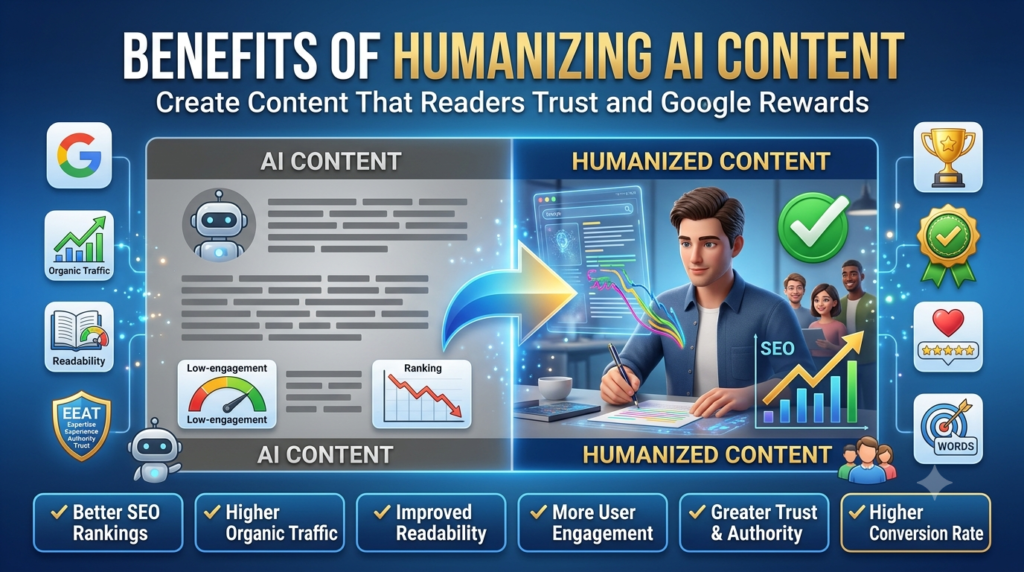
Humanized content creates a better reading experience. Visitors enjoy natural conversations more than robotic explanations. They trust information that sounds authentic. This trust encourages people to share your articles, return to your website, and recommend your content to others. Strong content marketing begins with content people genuinely enjoy reading.
Better engagement also improves SEO performance. Natural writing supports on-page SEO because readers stay longer and interact with your content. Search engines notice these positive signals over time. When you combine AI efficiency with careful editing, you build articles that satisfy both users and algorithms.
| Benefit | SEO Impact |
| Natural writing | Better user engagement |
| Higher readability | Lower bounce rate |
| Useful information | Improved rankings |
| Human editing | More reader trust |
| Better structure | Longer session duration |
How to Humanize AI Content Without Losing SEO
The best approach starts with treating AI as your assistant instead of your final writer. Generate a draft first. Then rewrite sections using your own voice. Replace repeated phrases with fresh wording. Add examples from real situations. Remove unnecessary filler. These small improvements make a huge difference. This is the foundation of How to Humanize AI Content Without Losing SEO.
You should also speak directly to the reader. Use words like “you” and “your” naturally throughout the article. Keep sentences short and easy to understand. Mix sentence lengths to create a natural rhythm. Finally, review every paragraph aloud. If it sounds robotic, rewrite it until it feels like a real conversation. This simple habit improves AI copywriting, strengthens readable content, and creates a better experience for every visitor.
Best Ways to Make AI Content Sound Natural
The easiest way to improve AI writing is to edit it like a real conversation. AI often explains ideas correctly, yet it rarely sounds like an experienced writer. Read every paragraph carefully. Remove repeated words. Replace common phrases with fresh expressions. This simple process helps you master How to Humanize AI Content Without Losing SEO while improving AI content humanizer techniques and humanize AI text naturally.
Another smart method is adding your own experience. Share a practical example, a lesson you learned, or a simple comparison that readers understand quickly. Personal insights create trust because they cannot be copied by machines. This approach also strengthens human written content, improves content quality, and makes your article more memorable.
Read Every Sentence Like a Reader
Before publishing, read your article aloud. If a sentence sounds strange, rewrite it. If two paragraphs repeat the same idea, combine them into one. Small edits often create the biggest improvements. A natural article feels smooth from beginning to end, and readers never notice where AI helped during the writing process.
Common Mistakes That Hurt SEO
Many writers believe copying AI output directly will save time. Unfortunately, this shortcut often creates weak articles. Repeated keywords, generic introductions, and shallow explanations reduce reader trust. These mistakes also limit your chances of earning long-term rankings. Learning How to Humanize AI Content Without Losing SEO means focusing on quality instead of speed while improving keyword optimization and SEO content writing.
Another common mistake is editing only grammar while ignoring value. A perfect sentence still fails if it teaches nothing useful. Every paragraph should answer a question or solve a problem. This strategy supports Google helpful content, increases visitor satisfaction, and encourages readers to stay longer on your website.
| Common Mistake | Better Solution |
| Publishing AI draft without editing | Rewrite in your own voice |
| Repeating keywords | Use natural keyword variations |
| Long robotic paragraphs | Break ideas into short sections |
| No examples | Add real situations |
| Weak conclusion | End with practical advice |
Best AI Humanizer Tools in 2026
Many tools promise perfect human writing. However, no software replaces thoughtful editing. Good tools help improve readability, yet your own review always produces better results. The best workflow combines AI drafting with careful editing. This method supports AI writing tools, improves AI content editing, and creates stronger search engine optimization results.
Several popular tools help writers improve content. They include ChatGPT, Grammarly, Hemingway Editor, QuillBot, and Undetectable AI. Each one solves a different problem. Some improve grammar while others simplify difficult sentences. The final quality still depends on the writer who reviews every paragraph before publishing.
| Tool | Best Use |
| ChatGPT | Draft creation and idea generation |
| Grammarly | Grammar and clarity |
| Hemingway Editor | Readability improvement |
| QuillBot | Sentence rewriting |
| Undetectable AI | Natural wording suggestions |
AI Content vs Human Content
Many people compare AI writing with human writing as if one must replace the other. The reality is different. AI saves time and organizes information quickly. Humans add personality, experience, and emotional understanding. Combining both creates stronger articles. This balance explains How to Humanize AI Content Without Losing SEO while supporting content marketing and organic traffic growth.
Think of AI as an assistant instead of an author. It prepares the first draft, but you remain the editor. Your improvements make the article unique, trustworthy, and enjoyable. Readers remember helpful advice more than perfectly structured sentences, which is why natural editing remains essential.
| Feature | AI Content | Human Content |
| Speed | Excellent | Moderate |
| Creativity | Limited | High |
| Personal Experience | No | Yes |
| Emotional Connection | Weak | Strong |
| SEO Potential | Good after editing | Excellent when optimized |
A Simple Real-Life Example
Imagine two bloggers writing the same article. The first blogger copies AI text and publishes it immediately. The second blogger rewrites every section, adds personal examples, improves transitions, and removes repetitive phrases. After several months, the second article usually earns more trust because readers find it easier to understand and more enjoyable to read.
This example shows why editing matters more than generation. High-quality articles solve problems clearly. They answer real questions instead of repeating common information. That is the real secret behind How to Humanize AI Content Without Losing SEO and building a website readers return to again and again.
Best Practices for Long-Term SEO Success
Many websites rank for a short time and then disappear from search results. The reason is simple. They chase quick wins instead of building trust. If you want lasting rankings, update your articles regularly. Add new facts, improve examples, and refresh outdated sections. This habit supports How to Humanize AI Content Without Losing SEO while strengthening EEAT, on-page SEO, and overall website authority.
Focus on helping readers before thinking about search engines. Answer real questions with simple explanations. Add clear tables where they improve understanding. Link to related articles on your website. Small improvements made consistently often produce better results than publishing dozens of average articles. Search engines reward websites that continue providing useful information.
Advanced Techniques to Humanize AI Content
Professional writers rarely publish the first draft. They rewrite introductions, improve transitions, and remove unnecessary words. You should do the same. Start each section with a sentence that creates curiosity. End each section with a useful takeaway. This approach keeps readers interested and naturally improves readable content and content optimization.
Another effective method is changing predictable wording. AI often repeats similar sentence patterns. Replace them with natural expressions that sound like everyday conversation. Add simple comparisons and practical examples when they improve understanding. These small changes make the article feel authentic without affecting SEO performance.
Add Your Own Voice
Imagine explaining the topic to a friend who knows nothing about SEO. You would naturally use simple words and practical examples instead of technical language. That same style makes your articles easier to understand. Readers trust content that feels honest because it sounds like advice from a real person instead of a machine.
The Future of AI Content and Google SEO
Artificial intelligence will continue changing content creation. New tools will become faster and smarter every year. However, one thing is unlikely to change. Google will always prefer useful pages that solve problems for readers. This is why learning How to Humanize AI Content Without Losing SEO remains an important skill for every content creator using AI copywriting and AI writing tools.
The future belongs to writers who combine technology with experience. AI can save hours of work, yet it cannot replace personal insight or critical thinking. Websites that publish original and trustworthy information will continue attracting loyal readers and sustainable search traffic.
Expert Tips for Better Humanized Content
Small improvements often create the biggest results. Write your first draft with AI if it saves time. Then rewrite important paragraphs yourself. Replace generic phrases with natural wording. Add statistics only from trusted sources. Finally, check every sentence to make sure it flows smoothly from one idea to the next.
You should also remember that readers scan articles before reading them carefully. Clear headings, short paragraphs, and useful tables improve the reading experience. Better readability encourages visitors to stay longer, which supports stronger SEO performance over time.
“AI writes faster. Humans write better. The strongest content combines both.”
Conclusion
Learning How to Humanize AI Content Without Losing SEO is one of the most valuable skills for bloggers, marketers, and website owners in 2026. AI can help you write faster, but it cannot replace human creativity, personal experience, and critical thinking. That is why the best articles are not written by AI alone. They are improved by a real person who understands the audience and adds value.
Instead of publishing AI-generated content without editing, take a few extra minutes to improve it. Rewrite robotic sentences, add practical examples, and explain ideas in a natural way. Keep your language simple, make your content easy to read, and focus on solving real problems. These small changes make a big difference in both reader experience and SEO performance.
Remember that Google does not reward content simply because it was written by a human or by AI. Google rewards content that is helpful, accurate, trustworthy, and useful. When your article answers questions clearly and provides genuine value, readers stay longer, trust your website, and are more likely to share your content.
The future of content writing is not AI versus humans. It is AI working together with human creativity. Use AI as your writing assistant, not your final editor. Let it save your time, then use your knowledge to make the content unique and engaging. This balanced approach will help you create better articles, build your website’s authority, increase organic traffic, and achieve long-term SEO success.
If you consistently follow these techniques, you will not only learn How to Humanize AI Content Without Losing SEO, but you will also create content that people enjoy reading, search engines trust, and your competitors will find difficult to beat.
FAQs
How do you humanize AI content?
You improve AI content by rewriting sentences, adding personal insights, removing repetition, and using natural language. Reading the article aloud also helps identify robotic wording.
Can AI content rank on Google?
Yes. Can AI content rank on Google? Absolutely. Google rewards useful and original information rather than the writing method. High-quality content has the best chance of ranking.
Is AI content good for SEO?
Is AI content good for SEO? Yes, if you edit it carefully. AI should create the draft, while you improve clarity, accuracy, and reader experience before publishing.
How can I make AI writing sound human?
How can I make AI writing sound human? Use shorter sentences, add real examples, vary sentence structure, and write as if you are speaking directly to one reader.
Does Google detect AI-generated content?
Does Google detect AI-generated content? Google focuses on content quality instead of whether AI helped create it. Helpful and trustworthy articles perform much better than low-quality content.
What is the best AI humanizer?
What is the best AI humanizer? There is no perfect tool. The best results come from combining editing software with your own experience and judgment.
How do you optimize AI content for SEO?
How do you optimize AI content for SEO? Add relevant keywords naturally, improve headings, strengthen internal links, increase readability, and update the article regularly.
Is AI-written content allowed by Google?
Is AI-written content allowed by Google? Yes. Google allows AI-assisted content when it provides value, demonstrates expertise, and helps readers solve their problems.
How can I improve AI-generated articles?
How can I improve AI-generated articles? Rewrite introductions, add practical examples, remove repetitive phrases, and include original insights that AI cannot create on its own.
What makes content sound natural?
What makes content sound natural? A conversational tone, varied sentence structure, real-life examples, and clear explanations make writing feel authentic and enjoyable.
Meta Description
Learn How to Humanize AI Content Without Losing SEO using proven techniques, Google-friendly strategies, practical examples, and expert tips to improve rankings and create natural, engaging content.
1 Comment